Artisans recreate a medieval Armenian instrument in Argentina
Headline and summary by local AI
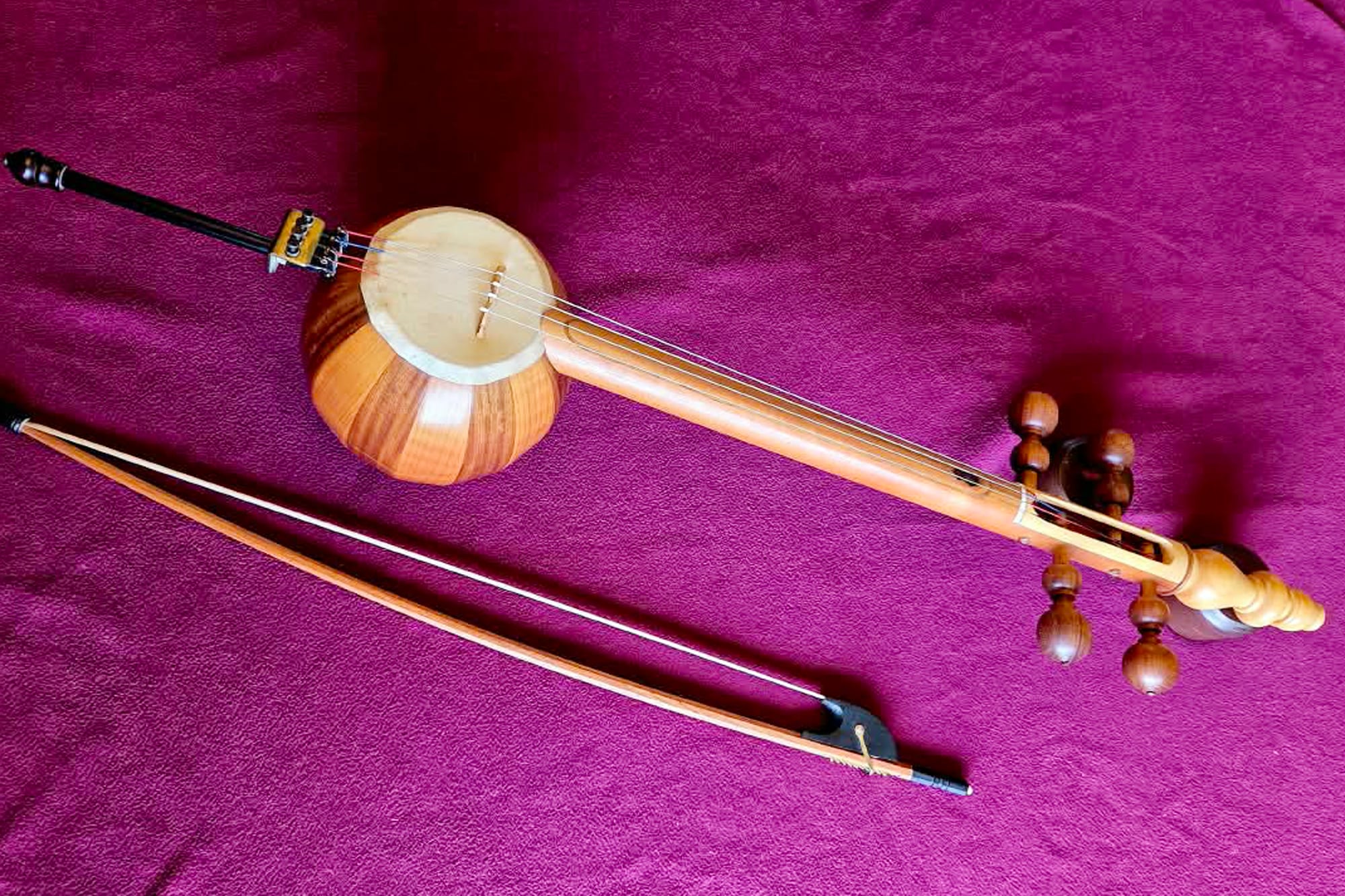
Alejandro Avedissian and Raúl Orlando Pérez collaborated to reconstruct a kemantchá, a medieval musical instrument that had fallen out of use.
The project aimed to revive the music of the 18th-century Armenian troubadour Haroutyun Sayatyan, also known as Sayat Nová. By rebuilding the instrument, the pair sought to restore a piece of cultural heritage linked to the Armenian people. Alejandro Avedissian, an economist and woodworker in Bariloche, Argentina, began his journey into lutheria by learning woodworking from his father, Félix.
He eventually specialized in crafting various stringed instruments like guitars and mandolins. Raúl Orlando Pérez, a craftsman from San Martín de los Andes, joined him as a mentor and collaborator. Together, they set out to clone the kemantchá, a Persian-origin instrument featuring a spherical resonator, a long neck, and three strings played with a bow. The pair faced challenges because no blueprints or construction techniques for the ancient instrument remained available.
They traveled through international archives and institutions to find information. They located a sketch in Tacoma, Washington, and measurements in Paris. In Armenia, they found a text by musicologist Sirvart Kazandjian that revealed how to tension the bow with Mongolian horsehair. After three years of research, they combined 17th-century European techniques with Argentine woodworking traditions to build the instrument. The project concluded with the completion of a kemantchá in Avedissian's workshop.
When he played the first chords for his friend Aspé and her daughters, the music evoked the cultural memories of Armenia.
Selected and summarized by local AI How we work