Archaeologists discover 7,000-year-old clay figurines in Romania
Headline and summary by local AI
Archaeologists unearthed two unique clay figurines from a prehistoric grave in southeast Romania during a 1956 excavation of a Stone Age cemetery.
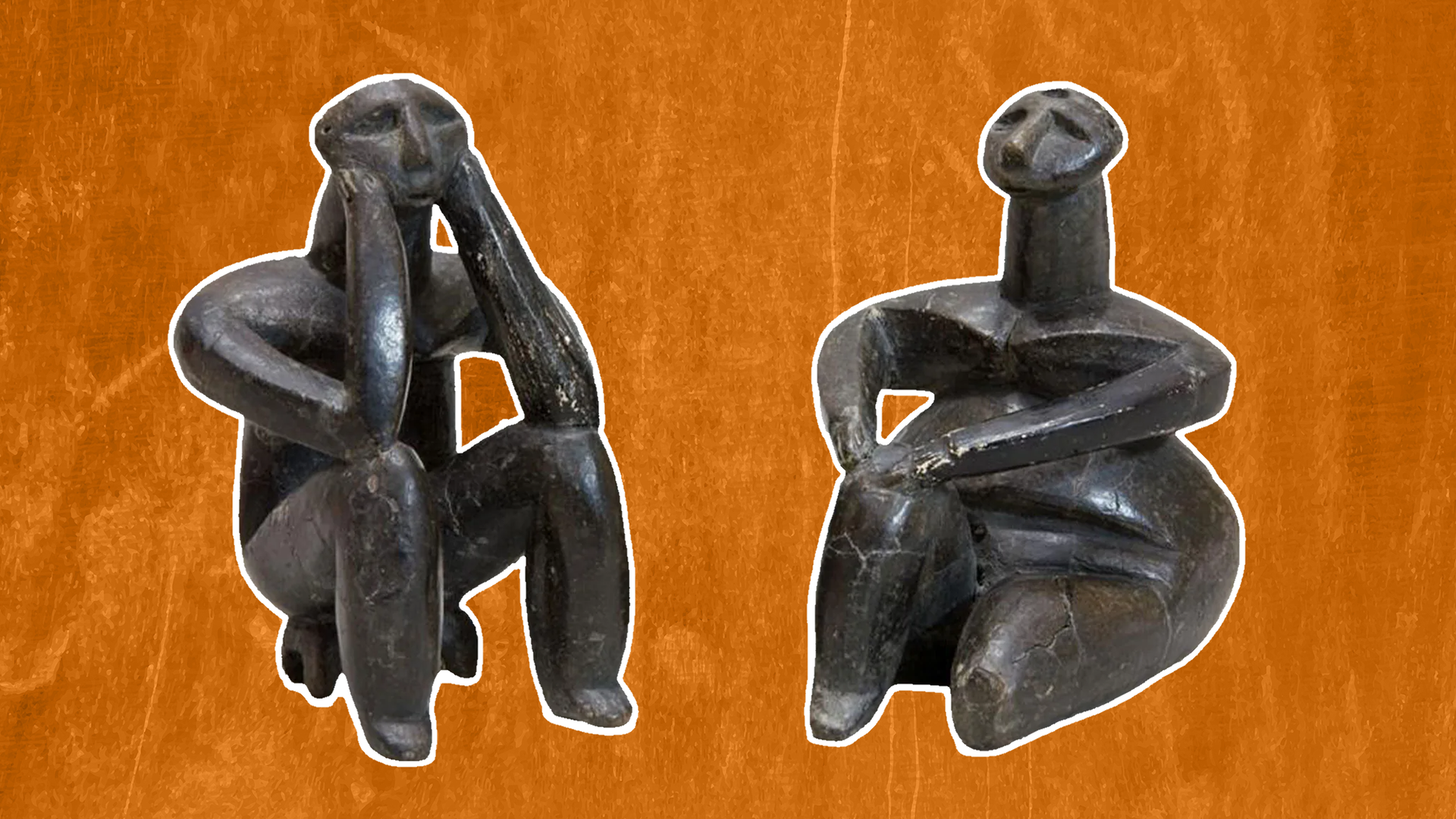
The figurines, known as the Thinker and the Seated Woman, were created by the Hamangia people, a Late Neolithic culture that lived between the Danube River and the Black Sea. The National Museum of Romanian History describes the figurines as being about 4.5 inches tall.
The Thinker sits on a four-legged stool with his head in his hands, a pose that the museum says resembles the famous 1904 bronze sculpture by Auguste Rodin. The Seated Woman features a long neck, a small face, and prominent hips and breasts. These pieces were made from fired clay around 5000 B.C.
Archaeologist Dumitru Berciu, who led the excavation, noted that while he found many human-shaped figurines in the cemetery, these two were unique because they were depicted sitting instead of standing. Berciu suggested the stylized figures might have served a magical or religious purpose, possibly linked to sun worship. Other interpretations from the National Museum of Romanian History suggest the pair might represent masculine and feminine principles, a family unit, or mourners buried with the deceased.
Selected and summarized by local AI How we work
More in Discovery

Young musicians use social media to connect communities across the Line of Control
aljazeera.com · 14 Nov 2026

Scientists discover new grasshopper species in the Tatra mountains
novinky.cz · 23 Nov 2026

Japanese animated Ramayana finds Indian audience decades after initial resistance
indianexpress.com · 18 Nov 2026