Sherlock Holmes inspired by Scottish surgeon’s deductions
Summary and headline written by AI from the source article. How we work
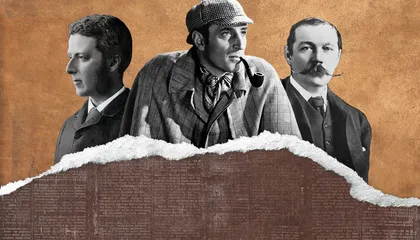
In Edinburgh, Scotland, Joseph Bell, a surgeon at the Royal Infirmary, influenced Arthur Conan Doyle with his remarkable diagnostic skills.
Bell routinely assessed patients by observing details others missed, their clothing, mannerisms, and even subtle physical traits, to determine their backgrounds and ailments. He famously diagnosed a man as a soldier and bagpipe player based on observation, then confirmed his assessment by uncovering a military tattoo. Bell’s methods extended beyond the hospital.
He collaborated with police surgeon Henry Duncan Littlejohn on criminal investigations, applying his observational skills to forensic science. Doyle, a medical student under Bell from 1878, absorbed these techniques and later incorporated them into the character of Sherlock Holmes. The author of a new book details how Bell transformed diagnosis into a performance, captivating students with his ability to deduce a patient’s history from minimal clues.
Bell’s approach, focusing on minute details and logical inference, became the defining characteristic of Holmes, distinguishing him from other fictional detectives. While Holmes achieved worldwide fame, Bell’s significant contributions to forensics and criminology have remained largely unacknowledged.