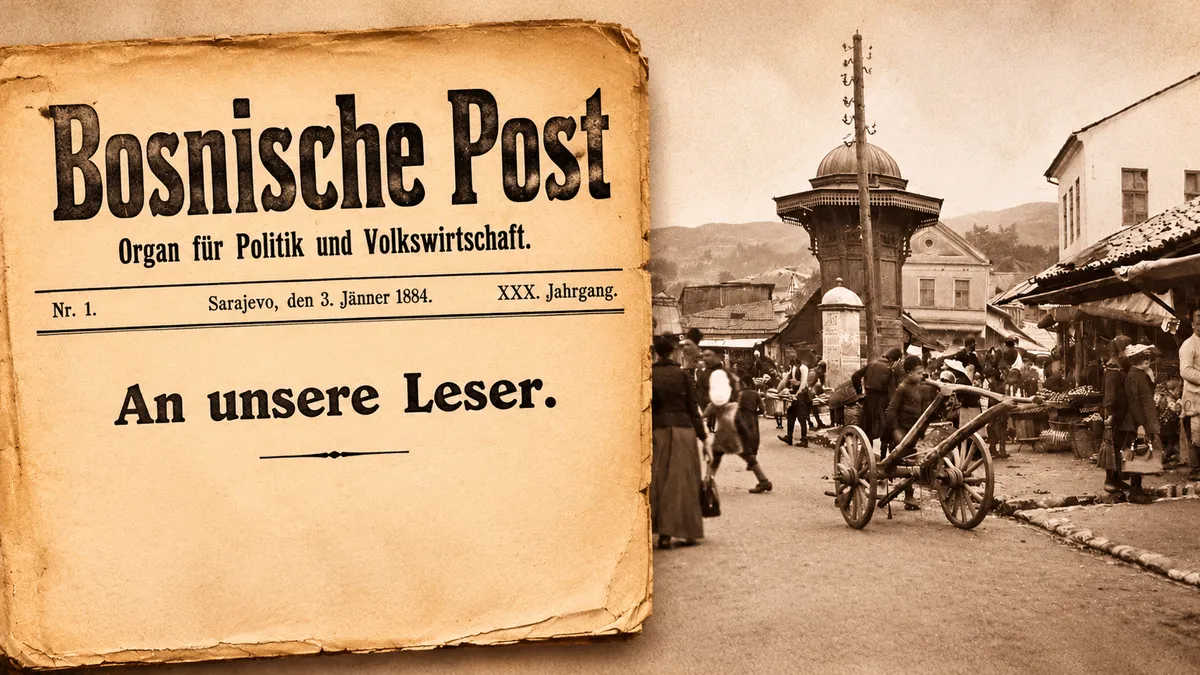
German language newspaper Bosnische Post shaped Sarajevo life for decades
Headline and summary by local AI
The German language newspaper Bosnische Post published news, lifestyle features, and advertisements in Sarajevo from 1884 to 1918.
This publication emerged just six years after the Austro-Hungarian Empire took control of Bosnia and Herzegovina. While it initially appeared several times a week, it transitioned into a daily newspaper in October 1896. Historian Carl Bethke documented the newspaper's role in the city's social and urban transformation.
The publication served as a window into the consumer culture of the monarchy, frequently featuring advertisements from Sarajevo and Vienna. These ads often showcased luxury goods and intimate items that residents ordered by mail because they were unavailable in local shops. The newspaper promoted a monarchist, civic, and secular view of society while also focusing on Bosnian culture and history. Milena Mrazović-Preindlsberger played a central role in the newspaper's history as a journalist and writer.
After the death of Eugen von Toepffer in 1889, she inherited the newspaper and the printing house. She served as the editor in chief until 1892, a time when male dominance in newsrooms was the norm. Although she faced criticism from other publications like Bošnjak for her portrayal of Bosnian Muslims, her work provided a unique perspective on daily life in the region. The newspaper ceased publication in 1918, marking the end of a specific era of printing in Sarajevo.
Today, archives of the Bosnische Post are preserved in libraries and digital collections. These records allow researchers and the public to track historical changes in city life, social relations, and how Sarajevo presented itself to the European public.
Selected and summarized by local AI How we work