Solar boreholes increase Irrigation capacity for farmers in Niger
Headline and summary by local AI
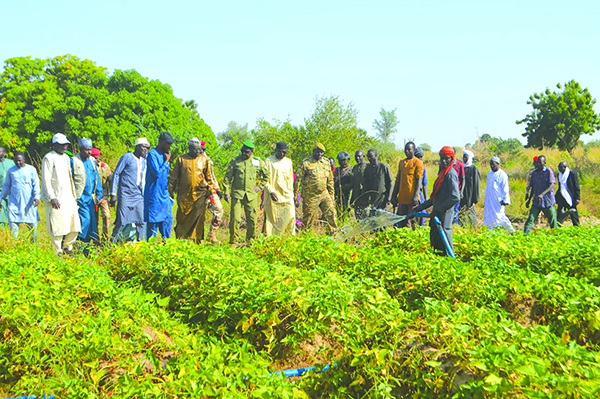
Colonel-major Bana Alhassane, the governor of the Dosso region in Niger, visited the Falmey department to inspect solar-powered water systems.
The visit focused on two sites covering 18 hectares that now utilize 10 equipped boreholes. These wells reach an average depth of 6 meters and provide a flow rate of approximately 5 cubic meters per hour. Local producers are using these solar-powered systems to irrigate their crops.
Abass Abdoul Moumouni, the president of the Gomni Gorou group, stated that the technology allows farmers to work from 7:00 to 17:00. He noted that the solar energy replaces the need for fuel to run motor pumps, which previously caused significant logistical difficulties. The governor explained that these projects are part of the Grande Irrigation program initiated by President Abdourahamane Tiani. Through the ONAHA, the Dallol Bosso area received 1,000 equipped boreholes to support the agricultural sector.
The governor urged local farmers to increase their production to overcome a recent poor rainy season and achieve food self-sufficiency.
Selected and summarized by local AI How we work
Solutions: Technology, policy and initiatives already in use against a real problem, with results to show.
More in Solutions
Kauaʻi County tightens building rules to mitigate wildfire risk
thecooldown.com · 21 Nov 2026
Quilombola communities secure land rights in southern Brazil despite political opposition
brasildefato.com.br · 20 Nov 2026

Pacific nations secure over $200 million for climate resilience fund
thisdaylive.com · 14 Nov 2026