Parisians destroyed their city to resist Caesar, archaeologists find evidence
Summary and headline written by AI from the source article. How we work
Archaeologists in Paris, France have uncovered remnants of a Gallic settlement that may be Lutetia, the ancient city destroyed by the Parisii tribe to prevent a Roman invasion led by Julius Caesar.
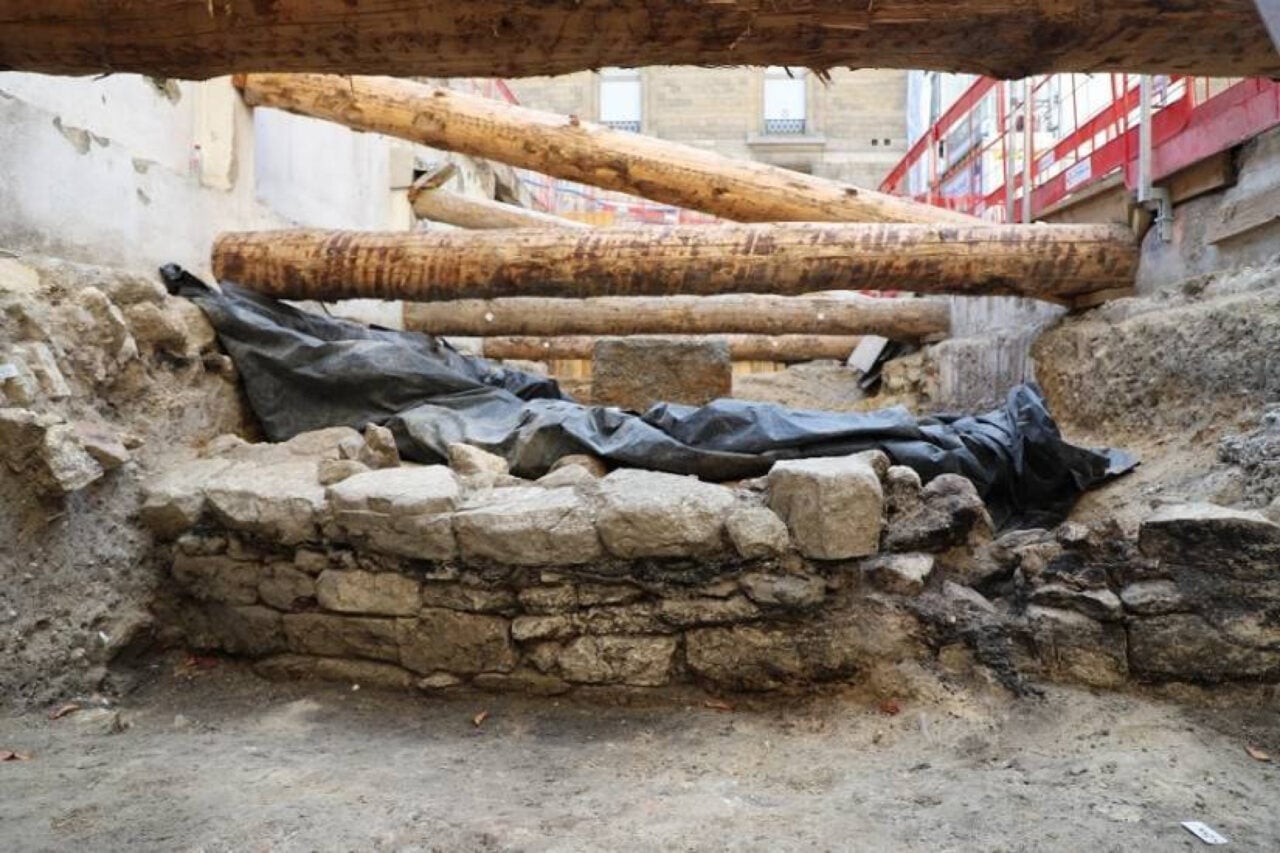
The team working with the Department of History of Architecture and Archaeology of Paris and the National Institute for Preventive Archaeological Research discovered ancient stone and wood walls with burn marks in the courtyard of the Hôtel-Dieu hospital on the Île de la Cité.
These findings confirm historical accounts from Caesar’s Gallic Wars, which described the Parisii intentionally burning Lutetia rather than surrendering it to Roman forces. For centuries, historians debated the exact location of Lutetia, but the newly discovered wall and defensive platform provide strong evidence for its placement beneath modern-day Paris. The archaeological team dated the fort’s construction to between 200 BCE and 10 BCE, and they also found a Gallic spearhead near the wall.
Because the remains are fragile and the site is scheduled for renovation, the team intends to carefully remove and reconstruct sections of the wall in a new location to preserve the discovery for future study.