Poisoned arrowheads reveal ancient survival strategies in Arabia
Headline and summary by local AI
Archaeologists discovered a 125,000-year-old hunter-gatherer site at Uruq Aljelibah on the shores of the ancient Mundafan lake in southern Saudi Arabia.
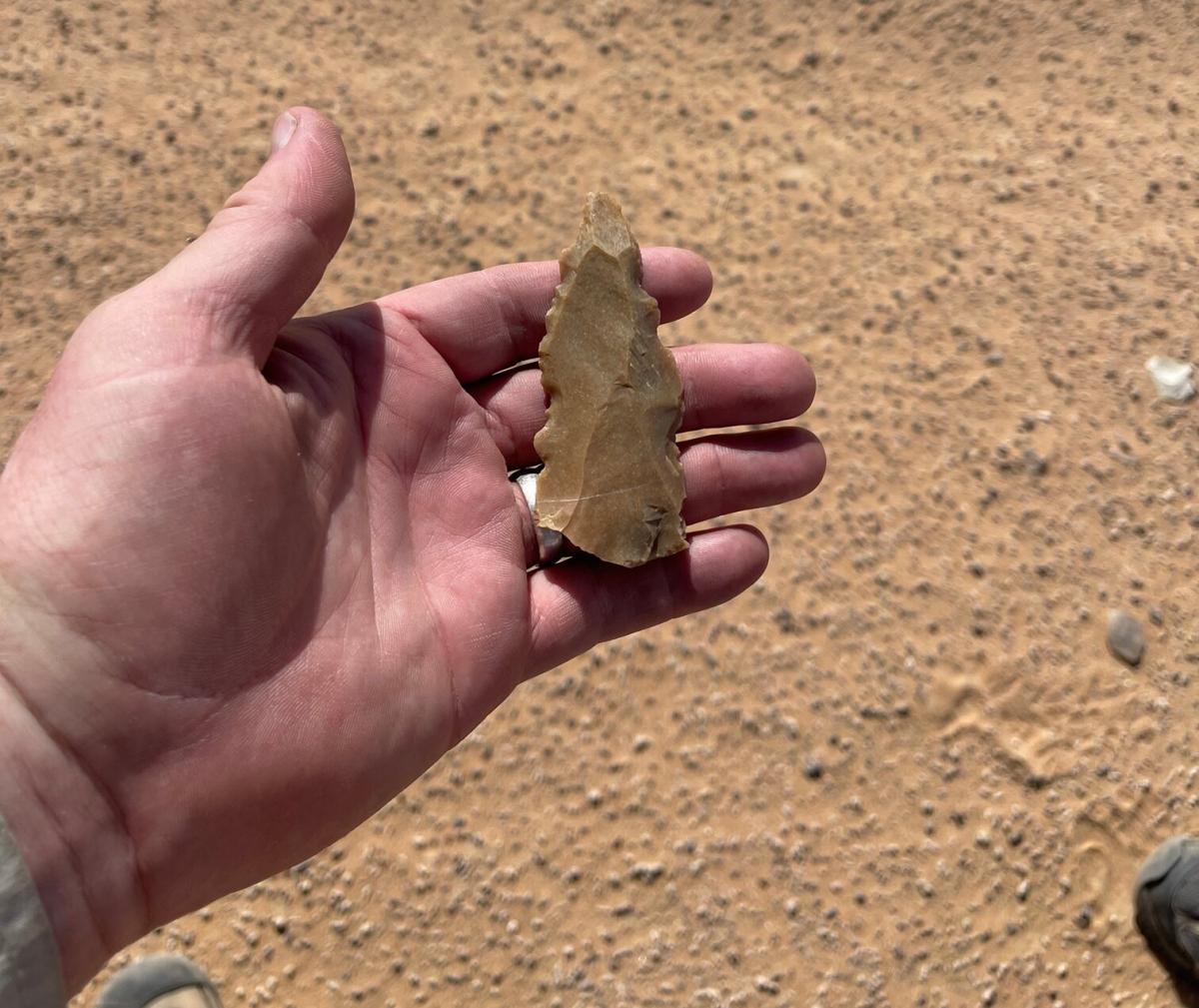
The site provides evidence of how early humans migrated from Africa toward Eurasia by utilizing the Arabian Peninsula as a habitable corridor during wetter climatic periods. Researchers found 5,511 stone artifacts at the location, many of which show signs of being used as hunting weapons.
Analysis of these stone points revealed traces of adhesives and plant fibers, including Egyptian balsam and Indian senna, which suggest that people attached the points to handles to create complex hunting tools. Most importantly, some artifacts contained compounds linked to Acokanthera schimperi, a plant known as the poison arrow tree. This suggests that prehistoric inhabitants used lethal toxins to hunt large animals such as hippopotamuses, ostriches, camels, gazelles, and buffaloes.
The findings indicate that the Arabian Peninsula was not always a desert but served as a functional environment with freshwater ecosystems that supported human life and diverse wildlife. The discovery of wood processing marks and tool-making zones provides a rare, complete picture of daily life for these early humans. While researchers cannot prove the poison was used specifically for hunting, the presence of processed megafauna remains strongly supports the theory of sophisticated survival strategies in the region.
Selected and summarized by local AI How we work
Discovery: Archaeology, new knowledge of art, culture and history, forgotten history uncovered, something lost restored.