Black and indigenous authors challenge the Brazilian literary canon
Headline and summary by local AI
Black and indigenous women are increasingly occupying space in Brazilian bookstores and publishing houses, challenging traditional literary norms by sharing their unique cultural experiences.
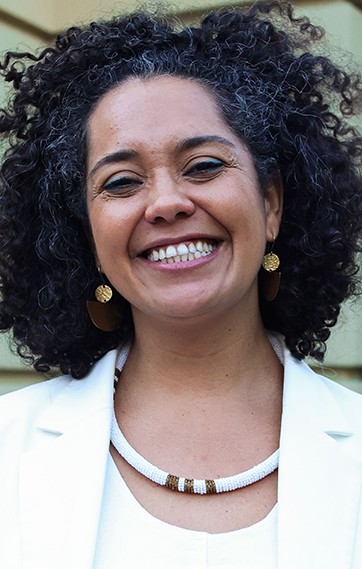
Writer Bianca Santana describes her literary journey as a process of discovering her black identity. Her work, influenced by the concept of "escrevivência" by Conceição Evaristo, explores themes of memory and belonging. She has published works ranging from biographies of black feminists to children's literature that addresses anti-racist dialogues.
Her upcoming novel, Apolinária, tells the story of a black grandmother who worked as a domestic laborer and her granddaughter who grows up with racial awareness. Research by Gabriela da Costa Silva at the University of Brasília reveals a historical lack of diversity in the Brazilian market. Between 2011 and 2021, Silva found only 154 black authors among more than 2,650 names in the catalogs of 15 traditional publishers in the Rio de Janeiro and São Paulo region.
Out of those 154 authors, 51 were published by large houses, 39 by medium houses, and 64 by small publishers. Researcher Rosane Borges argues that expanding the presence of these authors requires changing the cultural references that shape the national imagination. Indigenous writers like Trudruá Dorrico are also entering the market to reclaim narratives that previously depicted indigenous lands as empty spaces.
Dorrico uses her work to assert indigenous languages and cosmologies, such as the Pemon concept of "pemon’kon" to describe true people. She organized an anthology of indigenous women's literature to ensure that these diverse voices are not reduced to a single identity. These authors use their writing to transform how the country understands its own history and existence.
Selected and summarized by local AI How we work


