Archaeologists debate gender of ancient Roman bronze statue
Headline and summary by local AI
Workers in Pamplona, Spain, discovered a large bronze statue buried in the ground during a construction project in 1895.
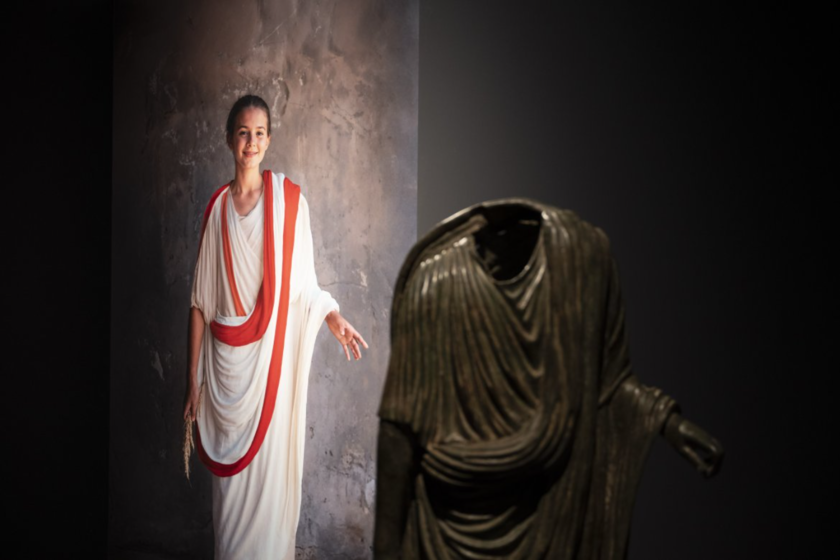
The 127 cm tall sculpture depicts a human figure wearing a formal toga. Because the piece was severely damaged and missing its head, researchers have spent over a century trying to determine exactly what the figure represents. The statue, known as the Togado de Pompelo, was initially identified as a young man from the second century AD.
However, a recent study by Carmen Marcks-Jacobs and Hans Rupprecht Goette challenged this view. These researchers suggest the sculpture actually depicts a Roman girl between 10 and 12 years old wearing a toga praetexta, a garment used during childhood to indicate citizenship. They also believe the figure holds a bundle of grain representing fertility. Other experts disagree with this new interpretation. Javier Andreu-Pintado argues that historical and iconographic evidence still supports the traditional identification of the figure as a male.
He criticizes the move toward the new theory before achieving a scientific consensus. The debate continues because the statue is one of only two bronze togas from that era found in the entire Iberian Peninsula. The Spanish government purchased the statue from a private American collection in 2023 for 620,000 dollars to return it to Spain. It is currently held by the Museo de Navarra.
Selected and summarized by local AI How we work
More in Discovery

Thai researchers discover new blood feeding fly species near livestock farm
thethaiger.com · 23 Nov 2026

Fossil analysis reveals complex human family tree in South Africa
scitechdaily.com · 14 Nov 2026
Archaeological discovery validates medieval Welsh legend about Roman forts
scitechdaily.com · 21 Nov 2026