Dinosaur fossil reveals how they fought infections
Summary and headline written by AI from the source article. How we work
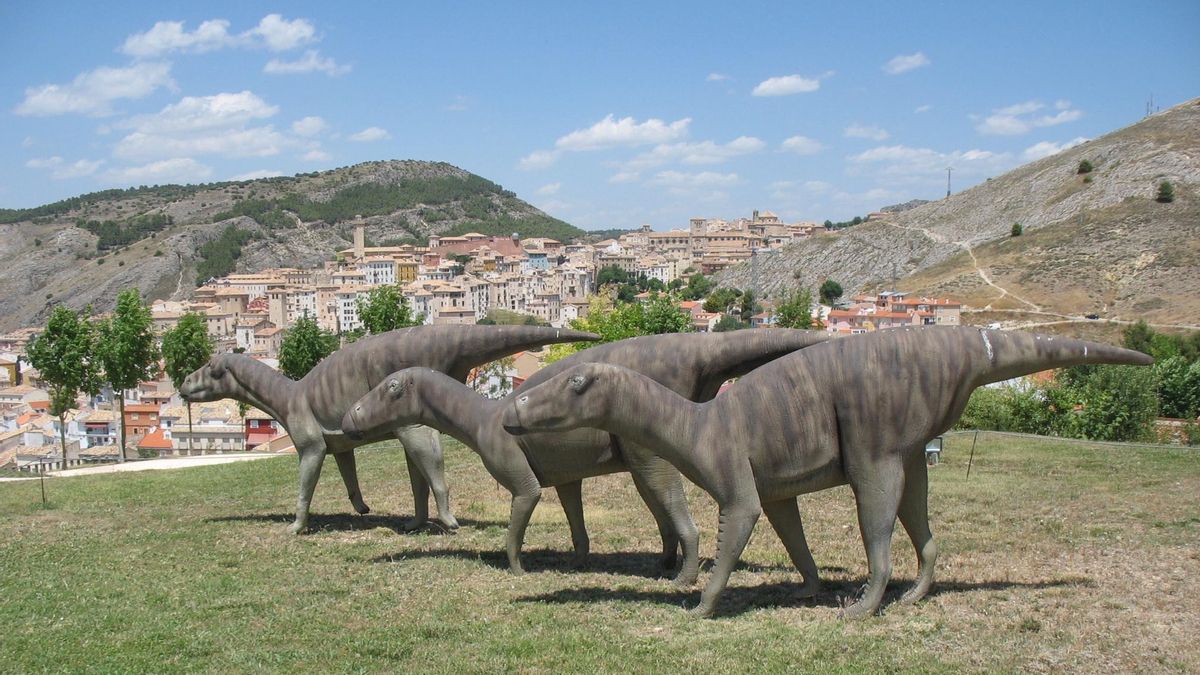
Researchers in Morella, Spain, examined a shin bone from an Iguanodon bernissartensis, a plant-eating dinosaur that lived around 125 million years ago, and discovered evidence of a bacterial infection. The team used CT scans to analyze the bone, which measured over a meter long, and found unusual swelling and smooth tissue that did not align with typical bone fractures or tumors.
They determined the dinosaur suffered from a tissue infection, likely a skin ulcer, and its body reacted by generating new tissue around the affected area of the bone. This discovery marks the first known instance of a dinosaur’s bone reaction to a bacterial infection. The new bone growth shows the Iguanodon survived for a time after becoming infected, allowing its body to begin a repair process.
However, the infection likely caused pain, inflammation, and limited the dinosaur’s ability to use its leg. The fossil came from the Mas de la Parreta site, a paleontological area in the Els Ports region. This area of Spain continues to yield valuable information about life during the Early Cretaceous period, including a variety of herbivore species. The findings add to understanding not just the anatomy of dinosaurs, but also how they coped with illness.


/https://tf-cmsv2-smithsonianmag-media.s3.amazonaws.com/filer_public/5f/6c/5f6c0f39-bd93-4c2a-9605-b518b8574158/irish_sheep_71088397.jpeg)