Tectonic changes near Japan helped form the Grand Canyon
Headline and summary by local AI
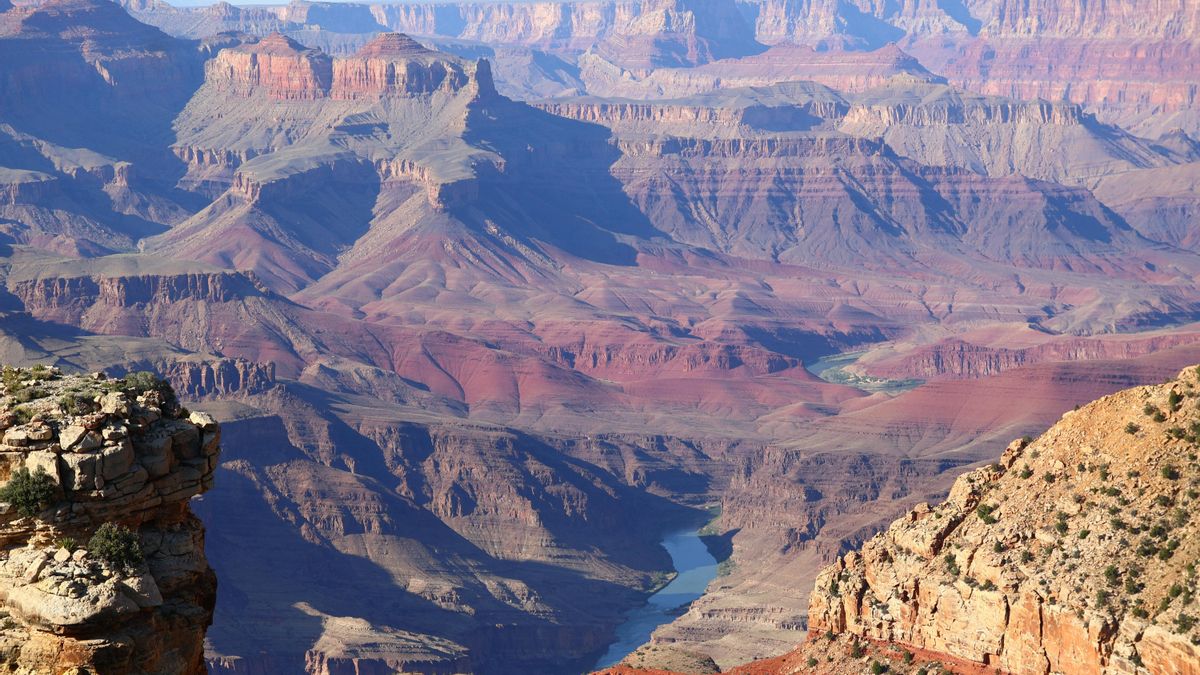
Researchers from the University of Texas in Austin found that tectonic shifts near Japan helped create the path for the Colorado River to carve the Grand Canyon in Arizona, United States.
The study, published in Science, suggests that the reorganization of the Western Pacific plates provided the extra force needed to open the Gulf of California. This geological event occurred thousands of kilometers away from the American Southwest.
The research team used 3D geodynamic models and supercomputers to simulate how tectonic plates interact globally. They discovered that between 10 and 12 million years ago, a single subduction zone near Japan split into two systems. This change altered the tension on the Pacific Plate, sending mechanical stress toward its eastern edge. The models showed that this distant shift added approximately 5 to 15 megapascals of tension to the region near the San Andreas Fault and the Gulf of California.
This additional pressure accelerated the opening of the Gulf of California between Baja California and mainland Mexico. While the region was already weakening due to the sinking of the old Farallon Plate, the Japanese tectonic shift provided the final push. This opening created a new path for the Colorado River to reach the sea. The river then flowed through the area, eroding the landscape to form the Grand Canyon.
Scientists say these findings also help explain earthquake patterns in the Cascadia subduction zone.
Selected and summarized by local AI How we work
More in Discovery

Freshwater fish consumption makes ancient human bones appear older
skynewsarabia.com · 17 Nov 2026
Jordanian amber reveals ancient pollen structures from 140 million years ago
jordannews.jo · 22 Nov 2026
St Paul's Cathedral to become first Anglican Church museum in Chile
theartnewspaper.com · 23 Nov 2026