Roman ship tar analysis reveals ancient trade routes and maintenance history
Headline and summary by local AI
Archaeologists and chemists from France and Croatia analyzed the remains of a Roman shipwreck located off the coast of Croatia.
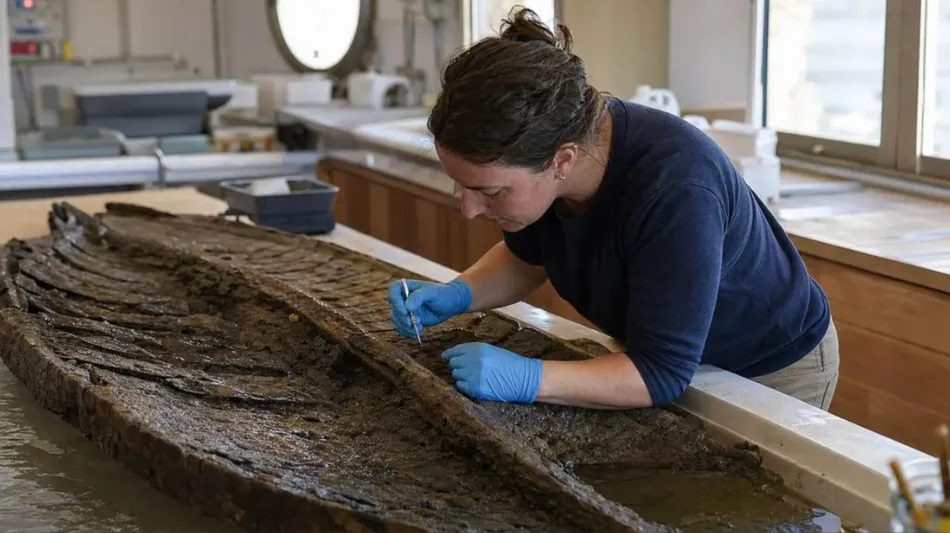
Led by specialist Armelle Charrié, the team examined the Ilovik-Paržine 1 wreck to understand how ancient shipbuilders protected wooden hulls from seawater and marine organisms. The researchers used mass spectrometry and pollen analysis on ten samples of organic substances found on the ship.
They discovered that most of the hull was sealed with pine tar, a substance made by heating conifer resin. One specific sample contained a mixture of pine tar and beeswax, a combination known in antiquity as zopissa, which provided extra flexibility for wood exposed to constant waves. The sticky tar captured microscopic pollen grains from the air during the application process.
By comparing the chemical composition of the tar with the botanical profiles of the pollen, the team identified four to five different coating cycles. These layers showed that the bow of the ship required more frequent repairs than the center or stern, likely due to the heavy wear of navigation. The botanical map created from the pollen suggests the ship was built or repaired in the vicinity of Brindisi, a port in southeast Italy.
This finding supports previous theories about the vessel's origin and reinforces the history of maritime trade during the expansion of the Roman Republic in the Adriatic Sea.
Selected and summarized by local AI How we work
More in Discovery

Argentine artist Milo J records live session on a river raft
letemps.ch · 22 Nov 2026

Researchers use CT scans to create 3D model of Jeremy Bentham’s mummified head
smithsonianmag.com · 19 Nov 2026

Foreign musicians shape Colombia's musical heritage through citizenship and art
colombiaone.com · 24 Nov 2026