Researchers use CT scans to create 3D model of Jeremy Bentham’s mummified head
Headline and summary by local AI
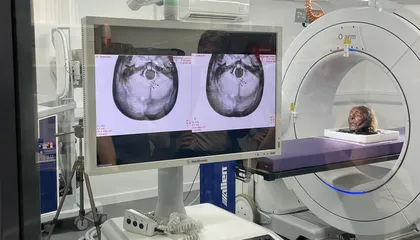
University College London researchers used computed tomography scanning to create a detailed 3D model of the mummified head of Jeremy Bentham, an 18th-century philosopher.
The team shared their findings in a film called Bentham Revealed. Bentham, who founded the philosophy of utilitarianism, had previously requested that his body be donated to science and publicly dissected upon his death in 1832.
Following his death at age 84, his friend Thomas Southwood Smith oversaw the dissection and created an auto-icon, which is a lifelike display of Bentham's skeleton dressed in a suit. The University College London has preserved this display since 1850. While Smith attempted to preserve Bentham's head for the display, the preservation failed, and a wax replica was used instead. Bentham's actual head was later stolen in 1975 and is now kept in safe storage.
The recent scans revealed that Bentham suffered from advanced arthritis in his lower jaw and was missing several teeth. The research team also identified physical modifications made by Smith, including a hole drilled through the skull to attach it to the auto-icon with a metal rod and the addition of glass eyes. The researchers plan to use the 3D model for teaching, archaeology, and conservation efforts while monitoring the condition of the remains over time.
Selected and summarized by local AI How we work