Buenos Aires authority installs floating barrier to block river waste
Headline and summary by local AI
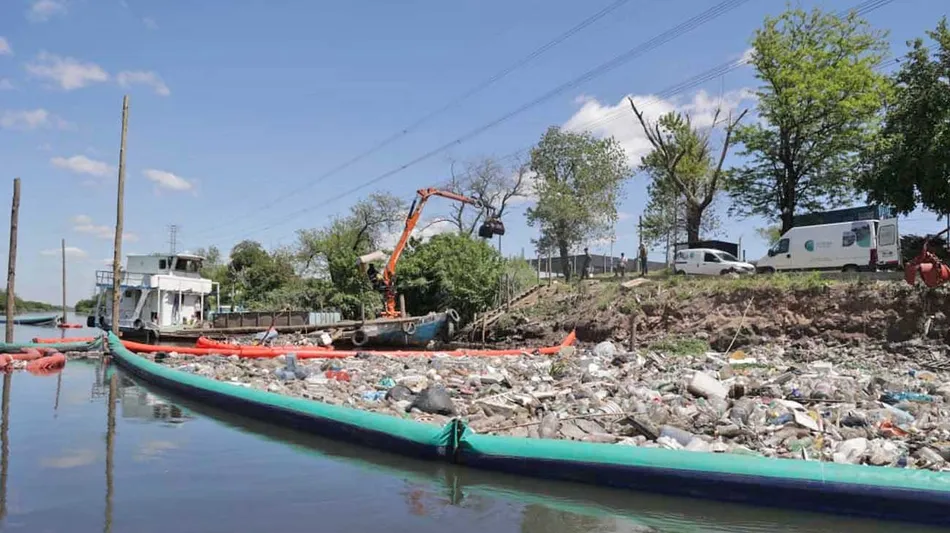
The Government of the City of Buenos Aires installed a 250-meter floating barrier at Puente La Noria to intercept waste flowing into the Riachuelo river.
This "llave de paso" or "turnkey" system uses a natural narrowing of the riverbed to trap debris before it enters the dense urban area of the city. The infrastructure works in tandem with a support boat, remote video surveillance, and a team of workers who operate a hydraulic crane to lift waste into containers.
The operation captures between 75% and 80% of floating debris before it reaches the city center. A crane performs 50 extractions daily, each move picking up approximately 200 kilograms of waste. The system prevents plastic, wood, metals, and textiles from spreading over the 15-kilometer stretch of the river. By stopping the waste at a single point, the city avoids the high costs of cleaning scattered trash across multiple jurisdictions and protects infrastructure like bridges and drainage systems.
The project relies on a shared management agreement between the City of Buenos Aires, the Province, the National government, and the Authority of the Matanza-Riachuelo Basin (Acumar). While the city provides operational supervision through the Dirección General de Limpieza, Acumar coordinates the logistical milestones and final disposal of the waste. Officials say the goal is to transform the river into an environmental corridor by reducing the plastic flow that flows into the Río de la Plata.
Selected and summarized by local AI How we work
More in Recovery

Democratic Republic of the Congo expands community forestry to protect biodiversity
fr.mongabay.com · 23 Nov 2026

Lake Baikal water levels rise after decades of decline
ct24.ceskatelevize.cz · 16 Nov 2026

Brazil Priority list policy reduces Amazon forest loss by 33 percent
eurasiareview.com · 18 Nov 2026