Argentina built nuclear power from early failure
Summary and headline written by AI from the source article. How we work
In Argentina, scientists and engineers overcame an initial failed attempt at nuclear fusion to establish a robust nuclear program.
In the late 1940s, Ronald Richter convinced President Juan Domingo Perón’s government that he could achieve controlled nuclear fusion. However, a 1952 review led by physicist José Antonio Balseiro found Richter’s claims were false, and the project on Huemul Island was shut down. From this setback, the National Atomic Energy Commission (CNEA) formed in 1950.
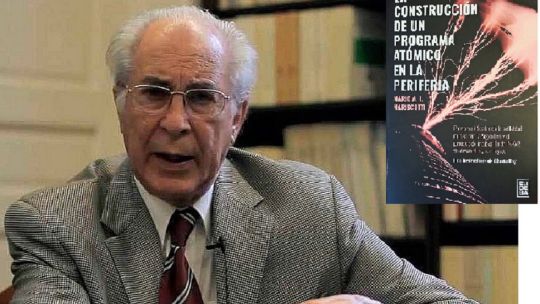
The CNEA gathered scientists, trained specialists, and established laboratories, including the Balseiro Institute of Physics in Bariloche in 1955. In 1958, Argentina activated the RA-1, the first experimental nuclear reactor in Latin America. Physicist Mario Mariscotti details this development in his book, La construcción de un programa atómico en la periferia, drawing from archives, documents, and his own 28 years working at the CNEA.
The book also traces the rise of INVAP, a company created in 1976 that exported reactor technology to countries like Algeria, Egypt, and Australia, expanding into satellites, radar, and nuclear medicine. Mariscotti’s work explores how Argentina developed scientific autonomy despite being geographically distant from major global centers.