Researchers test theory that rock formation near Mount Ararat is Noah's Ark
Headline and summary by local AI
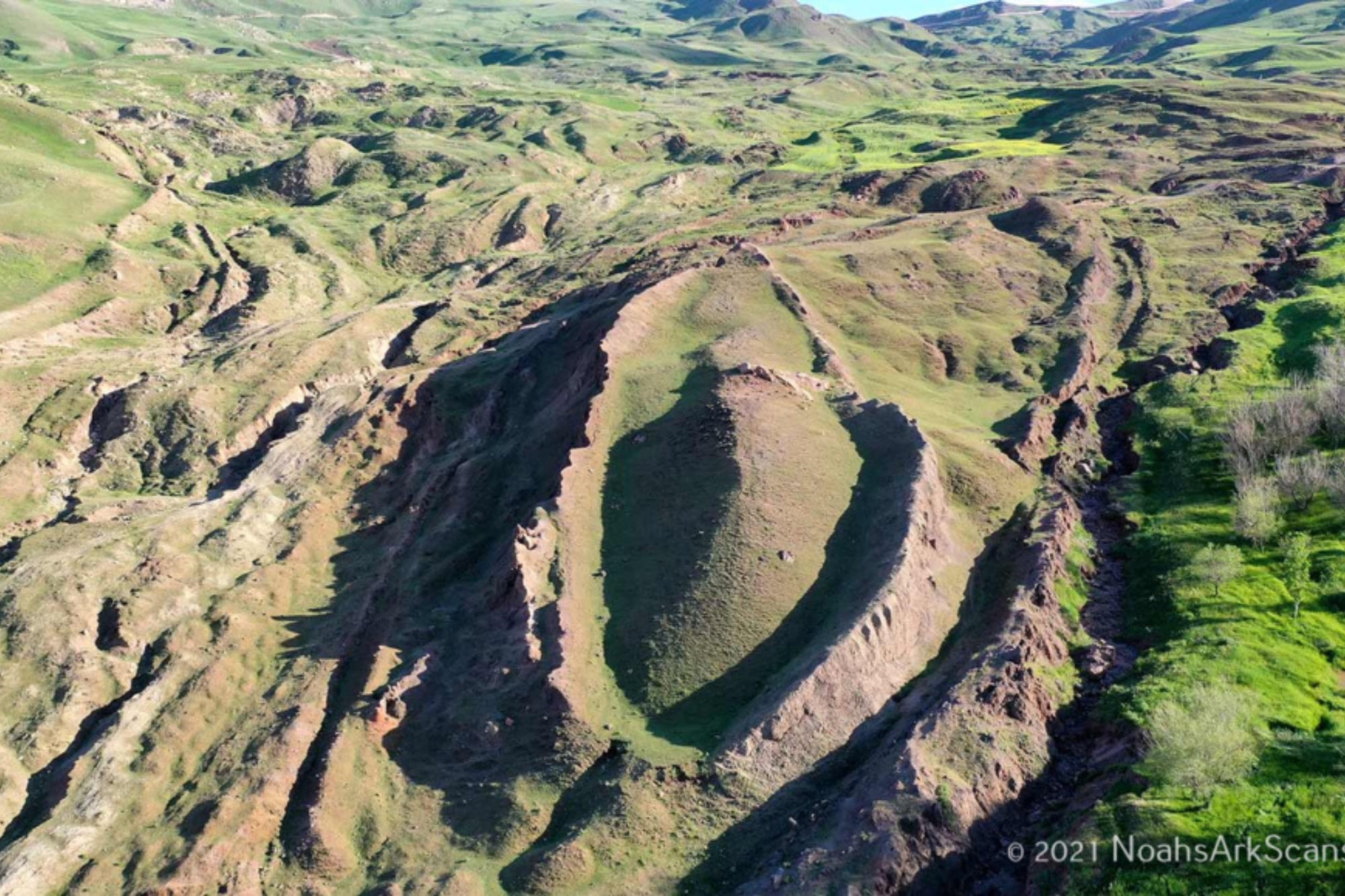
A team of specialists is conducting a deep investigation at the Durupınar site near Mount Ararat in eastern Turkey to determine if a ship-shaped rock structure is the remains of Noah's Ark.
Professor Cenker Atila of Sivas Cumhuriyet University leads the project, which seeks to analyze the site's historical and geological origins. The research team extracted charred wood samples from a depth of nine meters.
Andrew Jones, the founder of Noah’s Ark Scans, stated that radiocarbon dating places this wood at 4,300 years old. Jones noted that this timeframe aligns with the year 2348 before Christ, a date previously proposed by Archbishop Ussher for the Great Flood. These findings have led explorers to describe the discovery as a major archaeological milestone. However, many geologists remain skeptical of the site's origins.
Professor Eric Vanden Eykel explained that most biblical scholars view the Genesis story as part of a tradition of flood myths shared across the ancient Near East. Vanden Eykel argues that the Durupınar formation is a natural geological structure made of sedimentary material rich in iron oxides, created by landslides and erosion. The current project uses advanced technology, including ground-penetrating radar and LiDAR scanning. Dr.
Khosrow Bakhtar, a rock mechanics expert, used his own radar technology to identify organized patterns, corridors, and underground chambers. While some researchers claim the soil contains unusually high levels of organic material, others like geologist Murat Avcı maintain the site is simply a limestone block moved by tectonic activity. The investigation continues into 2026 as the team awaits final laboratory results.
Selected and summarized by local AI How we work