A forest farm in Argentina switches to high quality wood model
Headline and summary by local AI
The Lacroze family and the management of La Escondida, a 10,000-hectare farm in Goya, Corrientes, Argentina, transitioned their forestry business to a high-productivity model to improve profit margins.
Previously, the farm used a production model established in 1990 that focused on high plant density and minimal maintenance. This approach produced large volumes of low-quality wood that fetched low prices from pulp mills. In 2021, the company directors determined that this old model was no longer competitive in the current market.
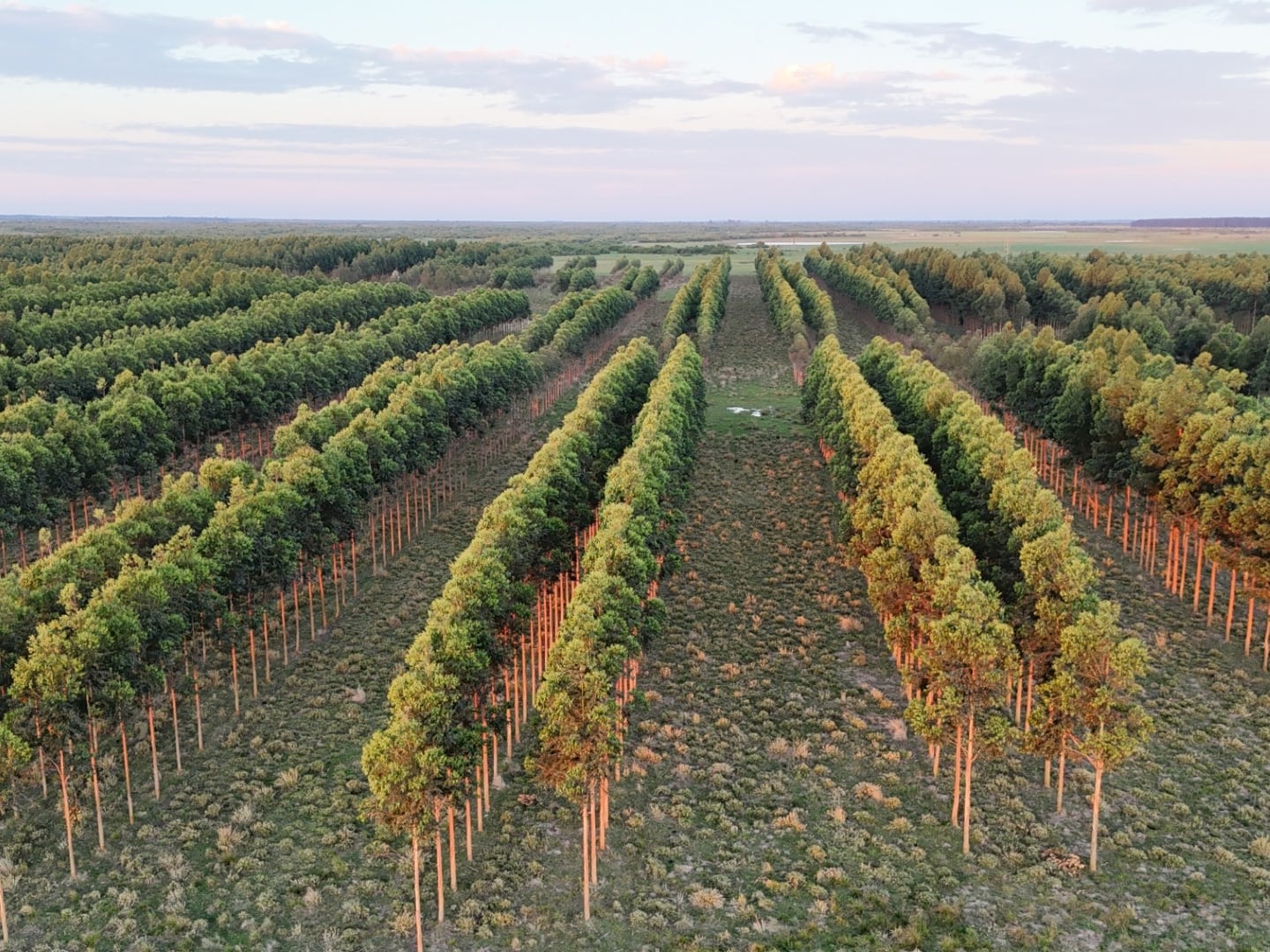
Consultant Tomás Dodds helped the farm redesign its operations to produce high-value timber for construction and public works. The new plan reduced the planting density from 1,300 trees per hectare to 650 trees per hectare. The farm began using clonal seedlings to ensure uniform and rapid growth.
To ensure the trees grew straight and free of knots, the team performed two rounds of pruning: the first at 1.5 years to remove branches up to 2.5 meters, and the second at three years to remove branches up to 4.5 meters. The farm also implemented a thinning process to reduce the population from 650 to 450 plants per hectare by the time of harvest. This allows the remaining trees to grow taller and wider.
The new system aims to reach a harvest cycle of 8 to 10 years, compared to the 15 years required by the old model. Additionally, the farm uses its own equipment to lower costs, reducing the price of planting one hectare of eucalyptus from 1,000 dollars to 600 dollars. The farm now sells wood to sawmills in Colonia Santa Rosa and Mercedes and converts leftover biomass into wood chips for electricity generation.
Selected and summarized by local AI How we work