EU officials assess childhood development in Namibia’s Kunene region
Summary and headline written by AI from the source article. How we work
European Union, Unicef, and Namibian government officials travelled to the Kunene region to evaluate projects focused on early childhood development and health improvements.
The delegation visited Opuwo and surrounding communities to observe education, nutrition, and sanitation initiatives funded through international partnerships. EU ambassador Ana Beatriz Martins emphasized the importance of education for Namibia’s future and stated the visit allowed the EU to see how its support was impacting local communities.
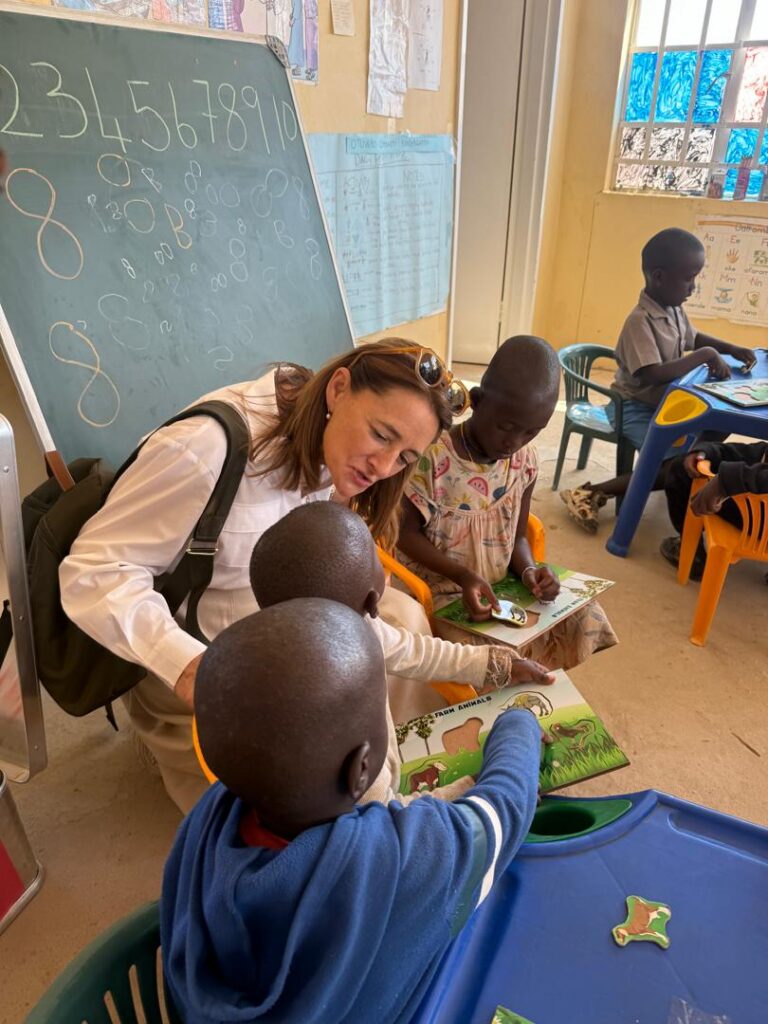
Only 17% of children in Kunene region currently attend early childhood development (ECD) centres, a lower rate than the national average of 24%. Samuel Ocran of Unicef explained that expanding access to these centres is vital because early childhood experiences significantly influence a child’s development. The officials toured the Otuvero Community ECD Centre, built in 2020 with EU funding, which currently serves 33 children.
These children receive nutritional support through a national feeding program, supported by the World Food Programme and funded by the EU. The EU also provided funds for renovations to water and sanitation facilities at Opuwo District Hospital’s maternity and paediatric wards, including plumbing and hygiene supplies. Unicef and the World Food Programme work with the Namibian government to implement these programs, with Unicef concentrating on learning programs and systems, while the WFP focuses on nutrition.