Archaeologists confirm Norse church find in Greenland
Summary and headline written by AI from the source article. How we work
Archaeologists in southern Greenland discovered the remains of a Norse church near Erik the Red’s settlement, providing new information about Viking life on the island.
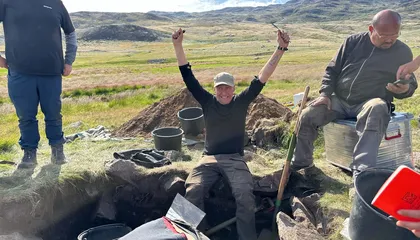
For decades, researchers suspected a stone structure discovered in the early 2000s was a church, but they needed to find a cemetery to confirm it. In August, the team unearthed a complete human skeleton buried in a Christian fashion, arms at the sides, head facing east, which proved the site’s religious purpose.
This discovery marks the first Norse church found in Greenland in over 60 years. The church, built from hewn stones, likely dates from 1100 to 1300 C.E. a time when Norse settlers were converting to Christianity. Located near the town of Narsarsuaq, the church is close to Brattahlíð, Erik the Red’s estate and the center of the Norse colony, which once held around 3,000 people.
Researchers believe multiple churches existed around Brattahlíð, possibly built by competing local landowners vying for religious influence and income. The site also appears to match a “Church Under the Sunny Mountains” described in a medieval Icelandic manuscript. The team intends to analyze the artifacts found during the excavation and hopes to return for further study if they receive additional funding, seeking to understand the fate of the Norse colony and the reasons for its disappearance in the early 15th century.