Humans’ unique walk may have enabled global expansion
Summary and headline written by AI from the source article. How we work
Researchers at Penn State University determined that consistently walking heel to toe sets humans apart from chimpanzees and likely helped early humans travel farther to find food.
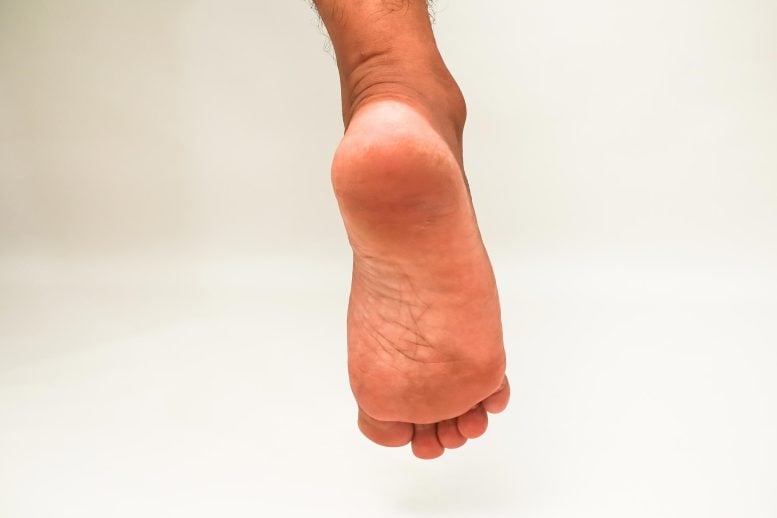
The team compared the walking styles of humans and chimpanzees, discovering that humans always land heel first during normal walking, while chimpanzees vary their foot placement.
They asked human volunteers to walk like chimpanzees, touching down on the ball of their foot first, and found that this midfoot strike required significantly more energy, 26% to 41% more, than heel-first walking. The scientists measured oxygen consumption and carbon dioxide production to quantify the energy used during each gait. They also used force plates and high-speed cameras to analyze the movements of both humans and three chimpanzees, along with data from fifteen other chimpanzees studied previously.
This analysis revealed that chimpanzees’ foot-strike angles varied considerably, while humans maintained a consistent heel-first landing. Although heel-first walking creates more impact force on the body, up to 162% higher in humans than midfoot strikes, the researchers suggest that early humans evolved stronger bones and joints to handle these forces. This efficient walking style may have allowed them to cover greater distances for hunting and gathering, ultimately contributing to their ability to spread across the globe.
Holowka noted that future research could explore how modern paved surfaces affect this evolved walking style.