Canada’s first Cretaceous dinosaur tracks reveal ancient coastal landscape
Summary and headline written by AI from the source article. How we work
Scientists in northeastern British Columbia, Canada, discovered the country’s first dinosaur tracks dating back to the Coniacian age, a period from 89.75 to 86.5 million years ago.
Guy Plint initially noticed the tracks in 1988, but a detailed study began in 2022, resulting in recent publication in Historical Biology. During the mid-Cretaceous period, much of western North America was covered by a vast inland sea, with the Rocky Mountains to the west and low plains to the east.
This time saw high carbon dioxide levels and a warmer climate, even extending temperate conditions to places like Alaska and Antarctica. Fossil evidence from this period, particularly from the Coniacian age, is scarce, making this discovery especially valuable. The tracks were found in the Tumbler Ridge area, within the Marshybank formation, which represents an ancient delta that extended into the inland sea.
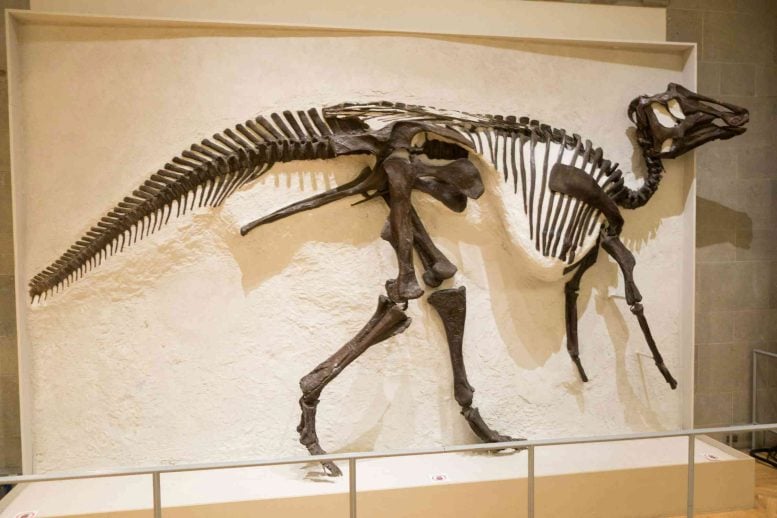
This delta preserved terrestrial sediments containing the dinosaur footprints, offering a rare glimpse into land-dwelling life during a time dominated by marine environments. River floods covered the area with sand, naturally casting the dinosaur tracks as the sediment hardened. Analysis of the tracks revealed that ornithopods, large, duck-billed herbivores, were the most common dinosaurs in the area. Scientists also identified tracks from theropod dinosaurs, carnivorous animals, and potentially ankylosaurians, armored dinosaurs.
The abundance of flowering plants during this period likely supported the growth of these herbivorous dinosaurs, which in turn sustained the carnivores that preyed on them. The Tumbler Ridge area is also a UNESCO Global Geopark, recognized for its fossil record.