Jurassic predator’s anatomy links to human brain development
Summary and headline written by AI from the source article. How we work
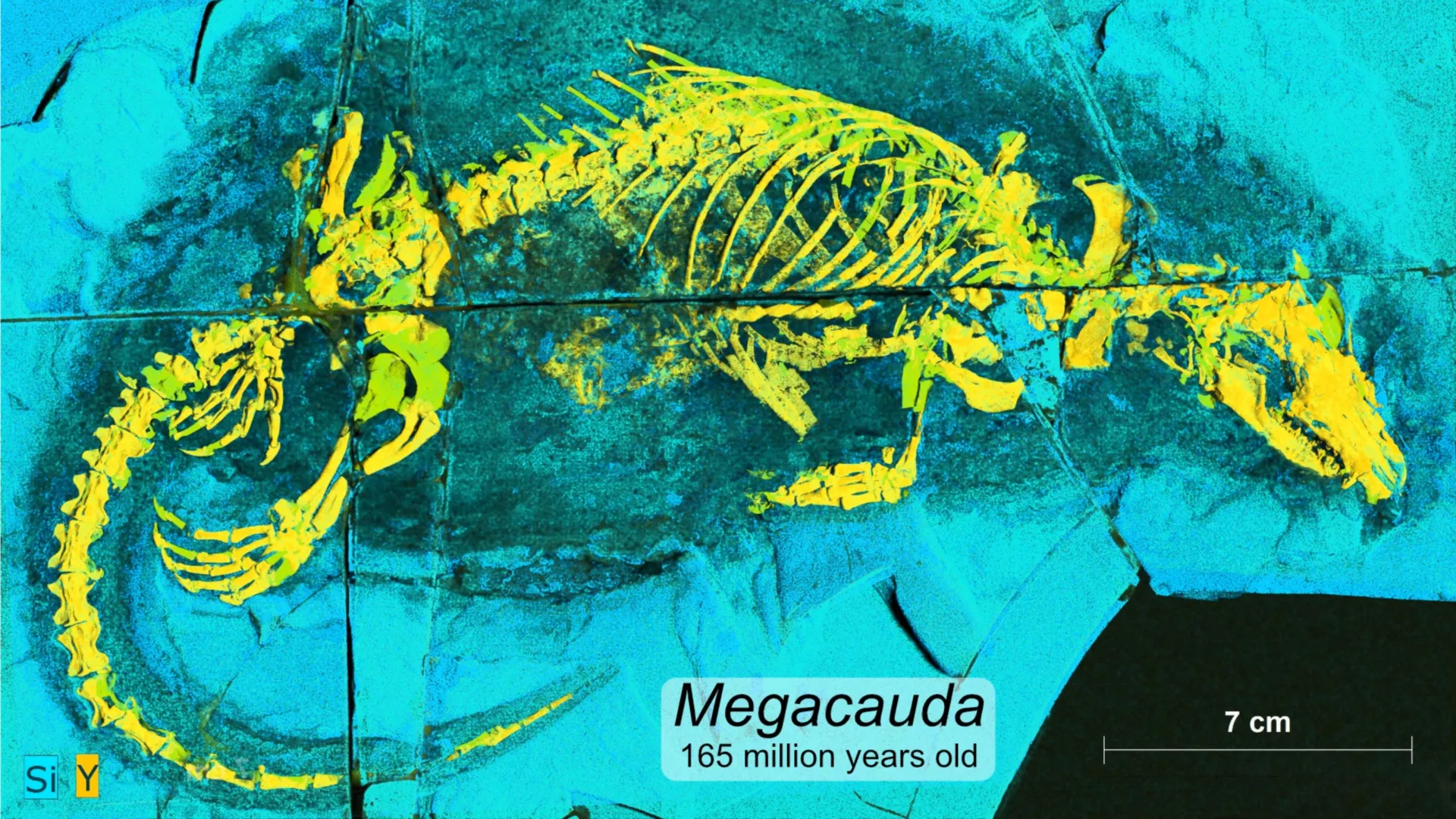
Researchers in China, the United States, and Germany studied a 165-million-year-old fossil, Megacauda sungei, a small predator that lived in what is now Inner Mongolia.
This ancient animal, roughly 20 inches long, was larger than most of its Jurassic relatives and hunted in the water, gripping prey with specialized teeth. Scientists discovered Megacauda sungei possessed a developed soft palate separating its mouth from its throat, enabling it to swallow while breathing.
This anatomical feature is crucial for mammals because it allows them to safely nurse their young, preventing milk from entering the nasal passages. Animals without a soft palate, like crocodiles, must lift their heads and jerk to swallow. The presence of this adaptation in Megacauda sungei suggests it arose millions of years before modern mammals, and supported the brain development that eventually led to humans.
The research team used CT scans to reconstruct Megacauda sungei’s anatomy, revealing it propelled itself through water with its front legs and tail, and that it belonged to an extinct group called docodonts. These early mammal relatives already occupied diverse environments, with some living in trees, others burrowing, and Megacauda sungei thriving in the water. The scientists named the species to honor Prof. Sun Ge, Honorary Director of the Paleontological Museum of Liaoning, where the fossil is housed.