Researchers identify potential medieval abbot in Roman sarcophagus
Headline and summary by local AI
Archaeologists and researchers have identified two potential candidates for a skeleton found inside a Roman sarcophagus at Westminster Abbey in England.
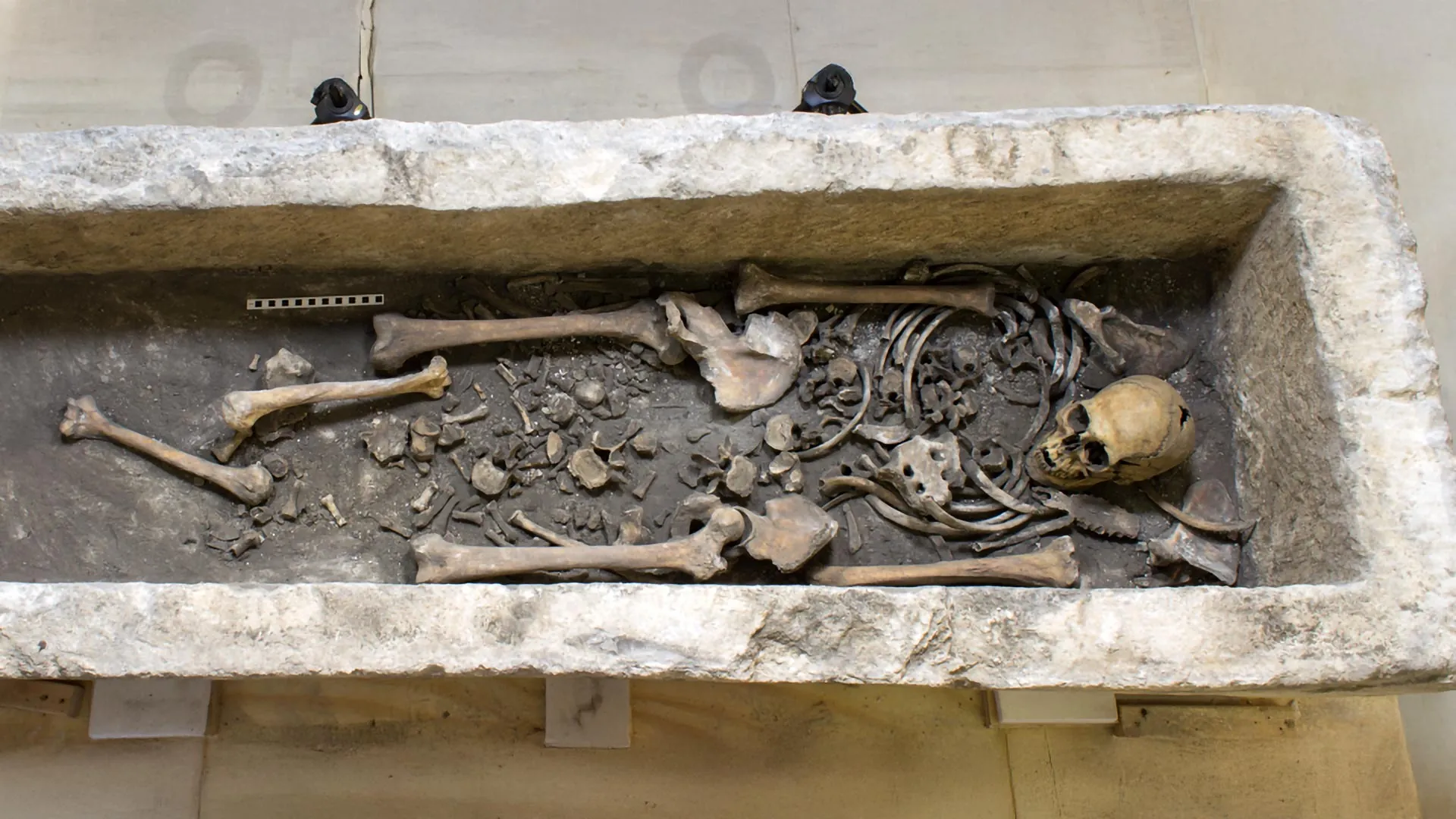
The limestone coffin, which was formally excavated in 1869, bears an inscription for a wealthy Briton named Valerius Amandinus who lived between 300 and 400 AD. However, a Latin cross carved into the lid dates to the 10th or 11th century, indicating the container was reused for a later burial.
Professor Warwick Rodwell of Westminster Abbey suggests the remains likely belong to a high-ranking medieval monk. Rodwell identifies Aelfwig, an abbot who died around 1020, as the primary candidate because Aelfwig served as a monk at the Benedictine monastery before his appointment. The second possibility is Wulnoth, who succeeded Aelfwig and died in 1049. Researchers believe the individual was likely in his early twenties when appointed and nearly fifty when he died.
The investigation relied on carbon dating and recent excavations. Analysis from the Scottish Universities Environmental Research Centre dated the burial to between 987 and 1052 AD. Recent excavations by Pre-Construct Archaeology in 2025 also provided new data on the remains. A human bone specialist determined the deceased was a man between 35 and 49 years old standing approximately 5 feet 9 inches tall, correcting an 1800s estimate that described the man as younger and shorter.
Selected and summarized by local AI How we work