Magic lantern projection technology helped astronomers measure star brightness
Headline and summary by local AI
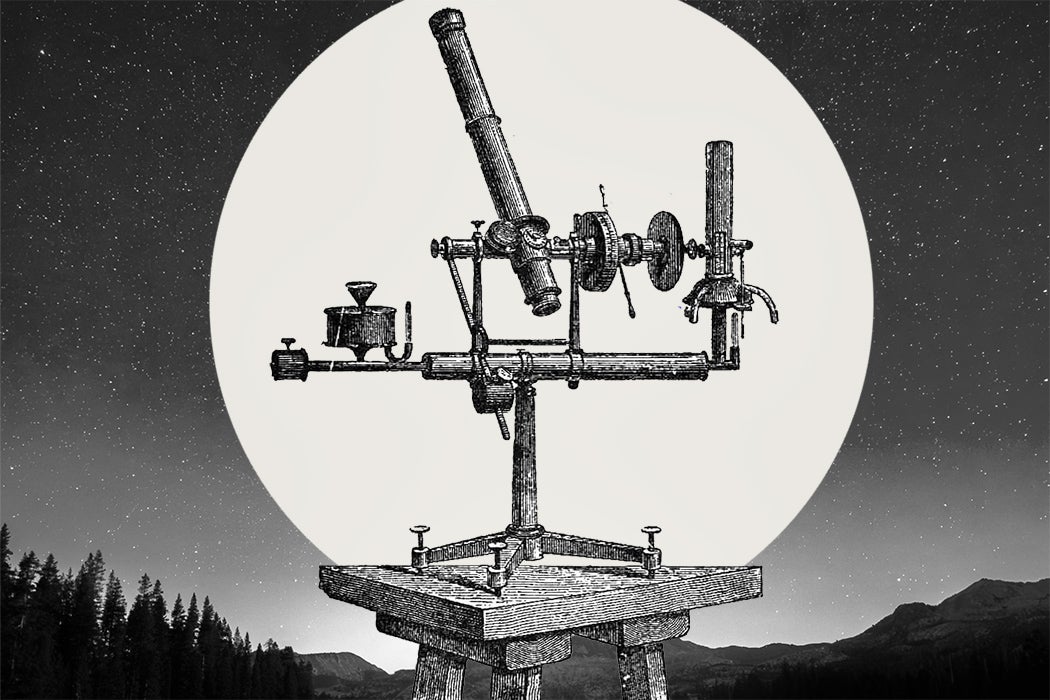
Karl Friedrich Zöllner developed an astro-photometer in the nineteenth century to help astronomers measure the color and brightness of stars.
He adapted the technology of the magic lantern, a projection system used by entertainers to display images and illusions to large crowds. Zöllner recognized that the subjective way people perceived these projected images could be used for scientific study. Zöllner designed the instrument to create artificial stars that appeared to exist in the same sky as real ones.
The device used a gas burner to provide steady light, which lenses and prisms then projected as points of light onto a semi-transparent glass screen. This allowed an observer to compare a real star with a controlled "ghost" star to determine precise measurements. Before this invention, astronomers often recorded different results for the same stars because their personal perceptions of brightness varied. The astro-photometer became a popular tool across Europe and the United States.
By the 1870s, nearly half of the observatories involved in international observing programs had purchased the device. While the tool did not make the science entirely mechanical, it helped astronomers refine their visual judgment and produce consistent data. Zöllner eventually became the first German professor of astrophysics.
Selected and summarized by local AI How we work