New giant fungus species emerges from China’s forests
Summary and headline written by AI from the source article. How we work
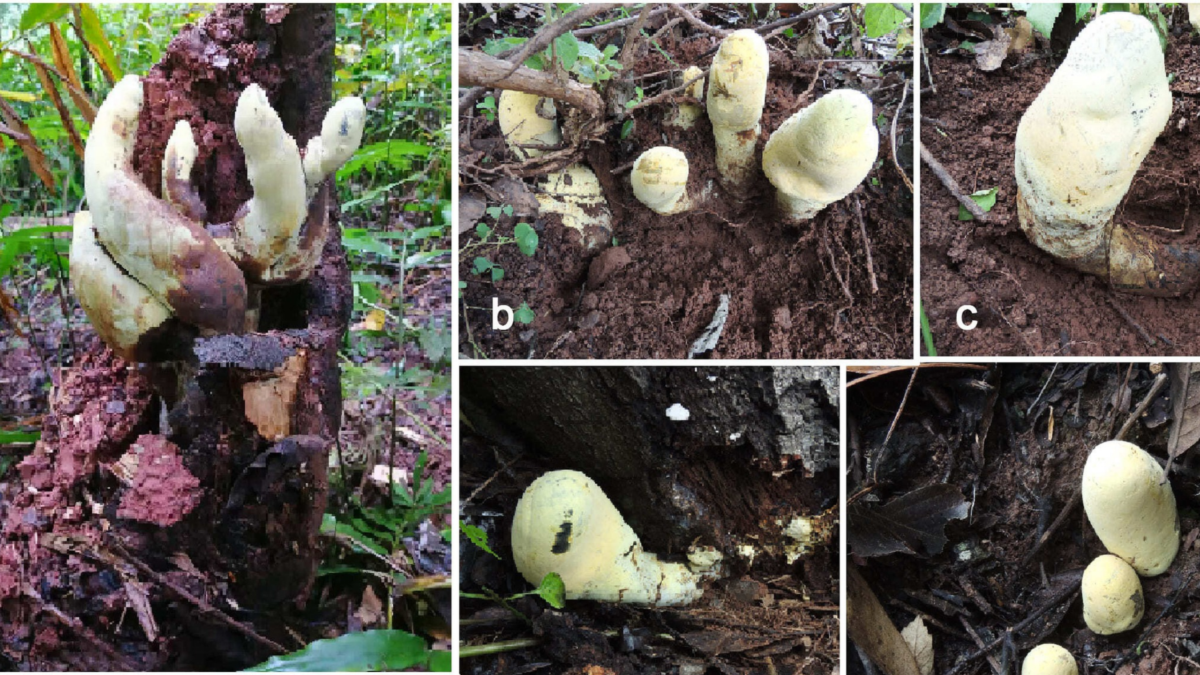
Scientists in Yunnan Province, China, discovered a new fungus species, Dianjunus rex (D.
rex), distinguished by its unusually large fruiting bodies, reaching up to 50 centimeters tall. The fungus is the sole member of the Dianjunaceae family and provides insights into fungal evolution. Researchers determined the family diverged from its closest relatives approximately 65 million years ago, around the time of the Chicxulub asteroid impact that caused a mass extinction.
This timing suggests a potential link between the asteroid event and the emergence of D. rex, as the resulting environmental changes, specifically an abundance of dead plant material, may have created opportunities for wood-decaying fungi. Evidence from fossils in North America and New Zealand also indicates a surge in fungal activity following this extinction event, potentially due to the cooler, darker conditions favored by fungi.
D. rex, related to morels and truffles, grows at the base of oak trees, feeding on decaying roots and stumps. It reproduces by releasing spores from large, white structures called stromata. While the reason for the fungus’s massive size, with some specimens weighing 2.2 kilograms, remains unclear, scientists hypothesize that larger fruiting bodies may improve spore dispersal in dense forests, balancing the energy cost of growth with ecological benefits.