Yonaguni monument: debate continues over Japanese underwater structure
Summary and headline written by AI from the source article. How we work
In 1986, Kihachiro Aratake, a diving instructor, discovered a submerged rock formation near Yonaguni Island, Japan, while searching for hammerhead shark viewing spots.
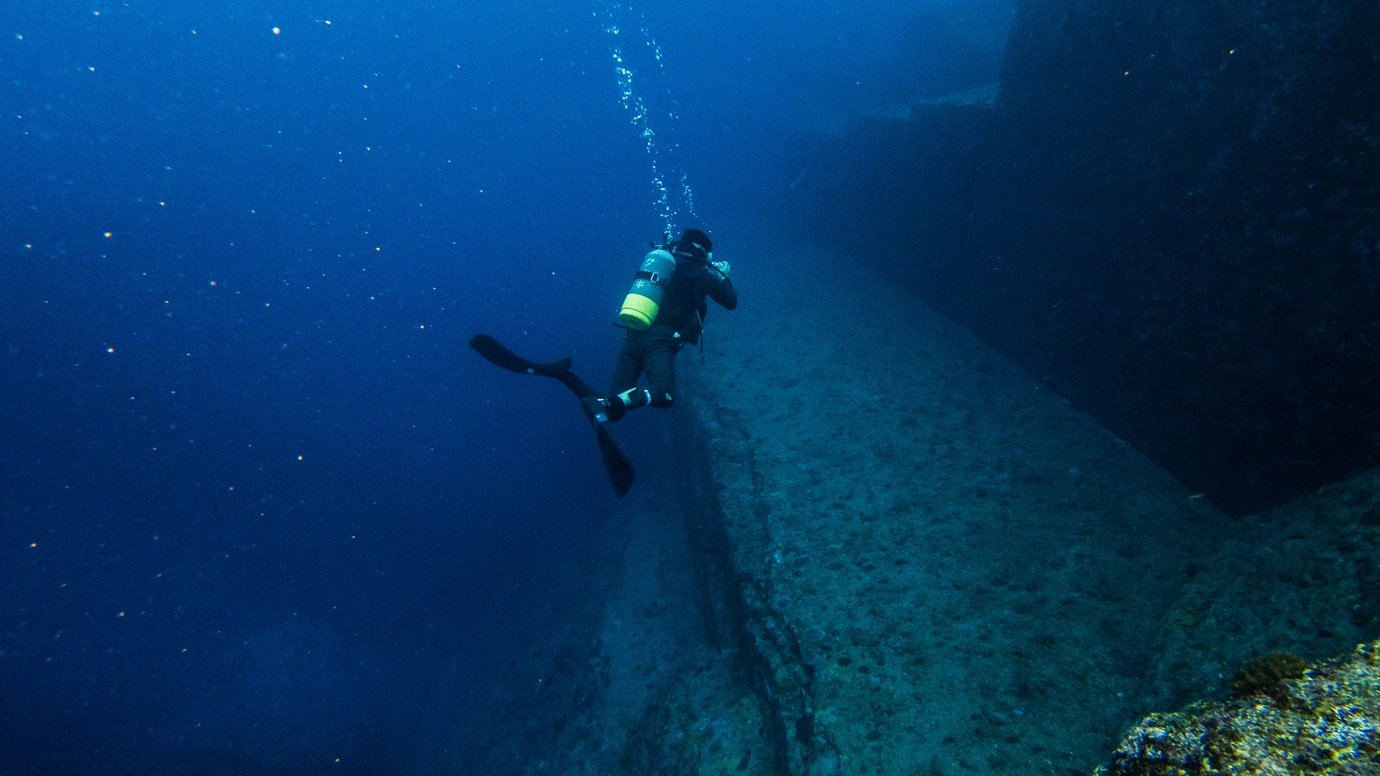
The structure, now known as the Yonaguni Monument, features stepped formations, ramps, and flat surfaces resembling human-made construction. Since its discovery, scientists have debated whether the monument formed naturally or resulted from human intervention. The Yonaguni Monument is a large sandstone formation measuring approximately 100 meters long, 40 meters wide, and up to 25 meters high.
Masaaki Kimura, a geophysicist at the University of Ryukyu, proposed in 2003 that the structure could be the remains of an ancient human construction dating back around 10,000 years, linking it to possible constructions in Okinawa. However, many geologists argue that natural processes like the fracturing of sandstone due to tectonic activity and erosion could account for the monument’s geometric features.
The structure has gained the nickname “Japanese Atlantis” due to its appearance, drawing comparisons to the lost island described by Plato. Despite these comparisons and associations with the legendary continent of Mu, there is no scientific evidence linking the monument to either lost civilization. Researchers continue to study the Yonaguni Monument, but its origin remains uncertain, with the natural formation theory holding sway among many geologists.