Roman engineers scaled flour production with a watermill complex in Gaul

Headline and summary by local AI
Roman engineers built a large-scale flour-processing complex at Barbegal in Roman Gaul, near the modern city of Arles in southern France.
The installation featured 16 waterwheels arranged in two descending rows on a hillside. This design allowed the facility to use the height of the landscape and a dedicated aqueduct to power the machinery for grinding grain into flour. Researchers have identified how the site functioned by studying the infrastructure and mineral deposits left behind by the water.
The complex was connected to an aqueduct that supplied water from an elevation high enough to create a downward flow. This setup allowed water to pass through a sequence of wheels, where the flow from a higher wheel could power a lower one. This arrangement maximized the use of the available descent across the entire complex. Archaeologists have also reconstructed specific engineering details, such as an elbow-shaped wooden flume.
This curved channel helped control the speed and angle of the water as it reached the wheels in a constrained space. By concentrating 16 milling units in one location, the Romans transformed grain processing into a specialized industrial operation. This moved the mechanical work of grinding away from manual labor and into a dedicated production site.
Selected and summarized by local AI How we work
Discovery: Archaeology, new knowledge of art, culture and history, forgotten history uncovered, something lost restored.
More in Discovery

Polish group recreates medieval Italian longsword techniques from 1404 manuscript
openculture.com · 17 Nov 2026
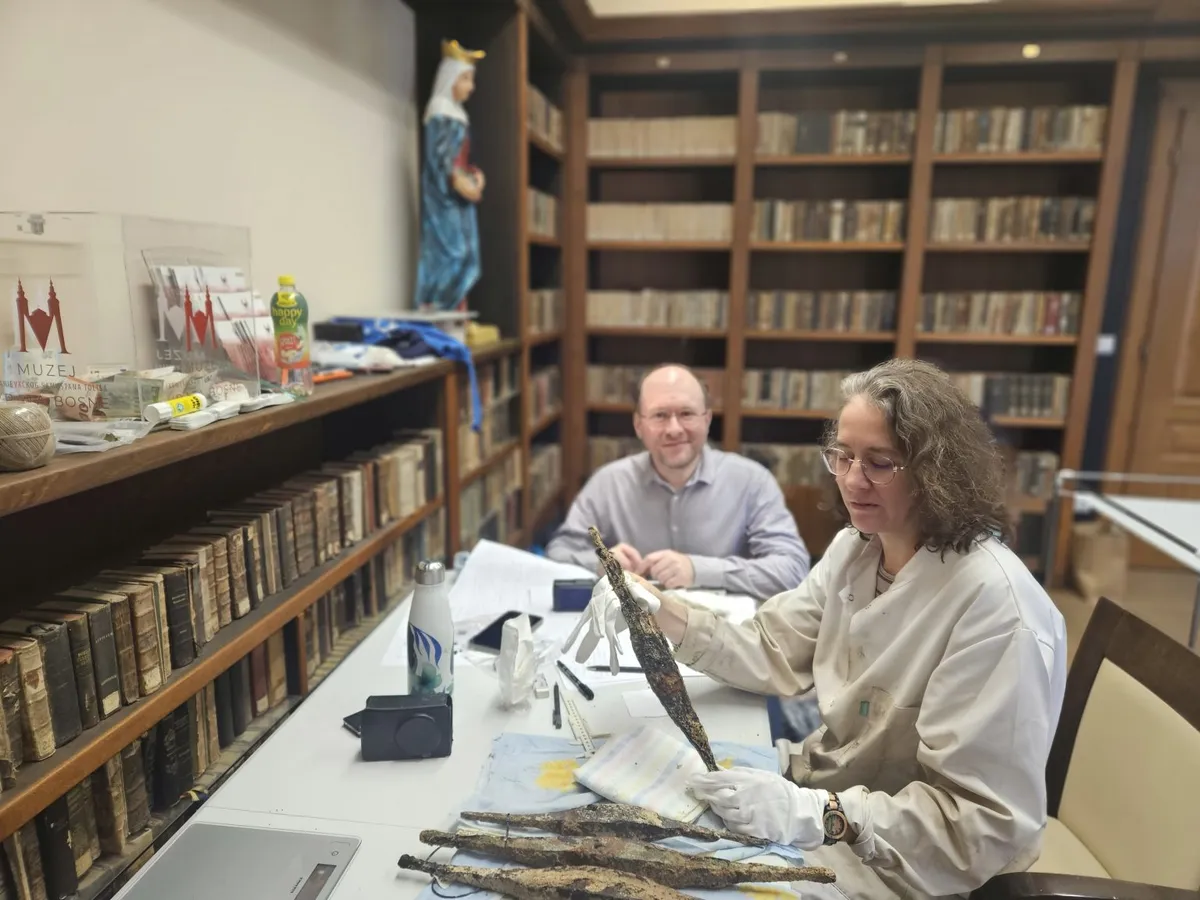
European scientists study ancient iron finds in Bosnia and Herzegovina
n1info.ba · 15 Nov 2026

Scholars search for the biblical garden of Eden in Mesopotamia and beyond
nationalgeographic.nl · 20 Nov 2026