European scientists study ancient iron finds in Bosnia and Herzegovina
Headline and summary by local AI
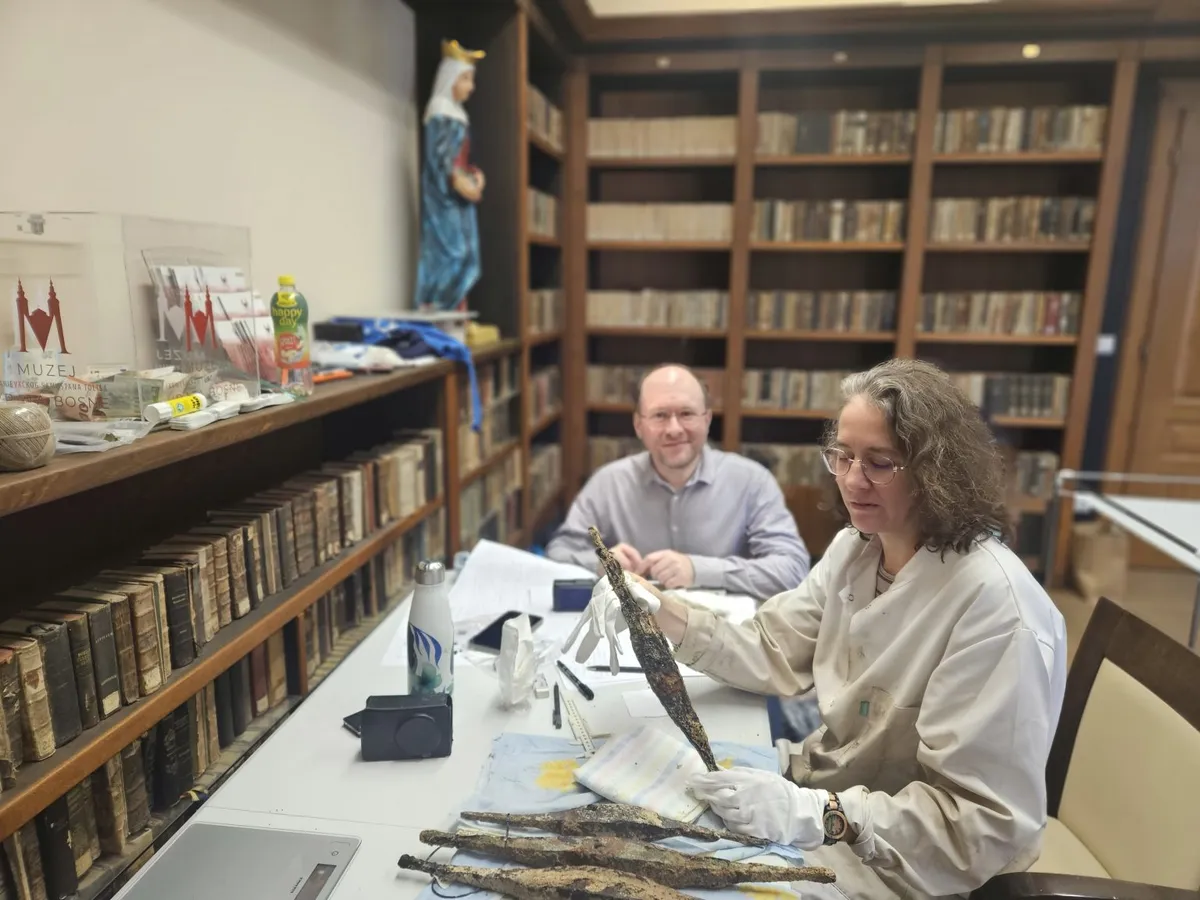
European scientists from Austria and France began a joint study of hundreds of ancient iron objects found in the Sava River near Tolis in the Posavina region of Bosnia and Herzegovina.
The research team, which includes professor Peter Trebsche from the University of Innsbruck, Marion Berranger from the French CNRS IRAMAT Belfort, and Mario Gavranović from the Austrian Academy of Sciences, is examining iron ingots.
These semi-finished metal pieces are more than 2,000 years old and were stored at the Vrata Bosne Franciscan Museum. The high concentration of these objects in one location suggests the Sava River served as a major trade and communication route during antiquity. The discovery is notable because similar ingots are typically found in Western and Central Europe. Experts say the quantity found in Bosnia and Herzegovina may exceed the total number of such items currently held in European collections.
Researchers aim to determine the origin of the iron, the production technologies used, and the specific trade connections that existed in the region over two millennia ago. Scientists are still investigating how the large load of metal ended up on the riverbed. One theory suggests the cargo belonged to a ship that sank during a storm or a conflict, though the team has not yet confirmed this conclusion.
The findings provide a new opportunity to reconstruct metal transport and processing history in the Balkans.
Selected and summarized by local AI How we work
More in Discovery

Researchers identify new Indian bramble shark species found in deep waters
zmescience.com · 14 Nov 2026
Ancient communities in northern Iberia abandoned settlements in under a century
xataka.com · 16 Nov 2026

Ancient minerals reveal new timeline for mountain building in Türkiye
phys.org · 19 Nov 2026