New armored dinosaur species found in Japan hints at ancient migration
Summary and headline written by AI from the source article. How we work
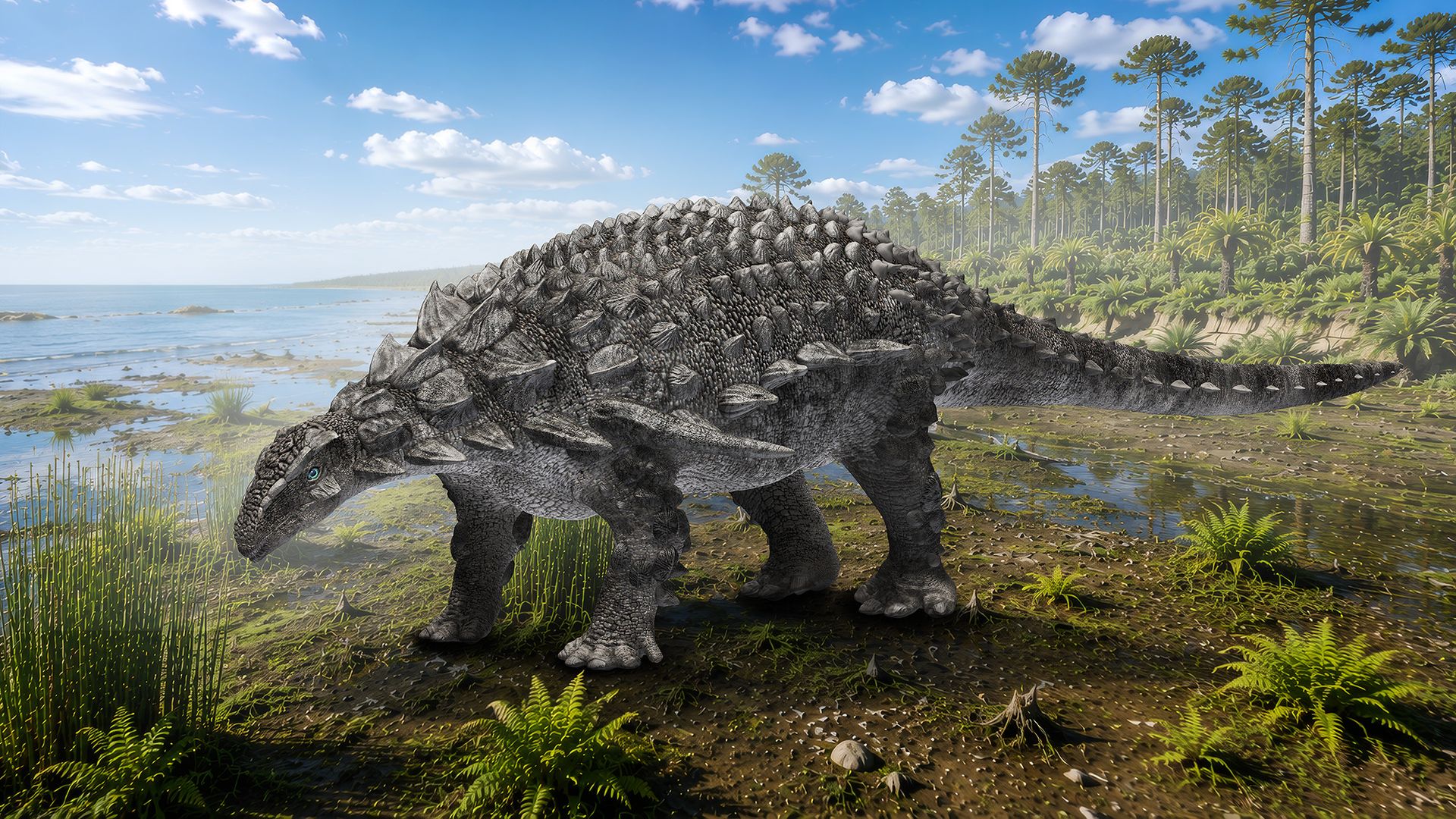
Researchers in Japan identified a new species of armored dinosaur, Nipponopelta yezoensis, from fossils discovered on Hokkaido island over 30 years ago.
The team used CT scans to examine the dinosaur’s skull, jaw, teeth, and bony plates, determining it was a nodosaurid, a relative of ankylosaurids but lacking the tail club.
They believe N. yezoensis ancestors travelled from North America to Asia across the Bering Land Bridge, a prehistoric land connection between Alaska and Russia, between 100 and 110 million years ago. The rarity of nodosaurid fossils in Asia supports this theory, as does the anatomical similarity between the new species and those found in North America.
Scientists also noted the original fossils were found in marine sediments, suggesting the dinosaur may have died inland and been carried to sea by a river or estuary. While this suggests nodosaurids may have lived near coastlines and used them to disperse, other paleontologists caution that the patchy fossil record makes it difficult to determine where these dinosaurs primarily lived.
They also acknowledge that the limited number of nodosaurid finds in Asia could be due to the preservation of rocks, or simply a lack of diversification within the region.