German metal detectorist unearths large Roman coin hoard
Summary and headline written by AI from the source article. How we work
Oliver Riedl, a metal detectorist in western Germany, discovered a hoard of over 900 Roman silver coins near Wesseling, a city south of Cologne.
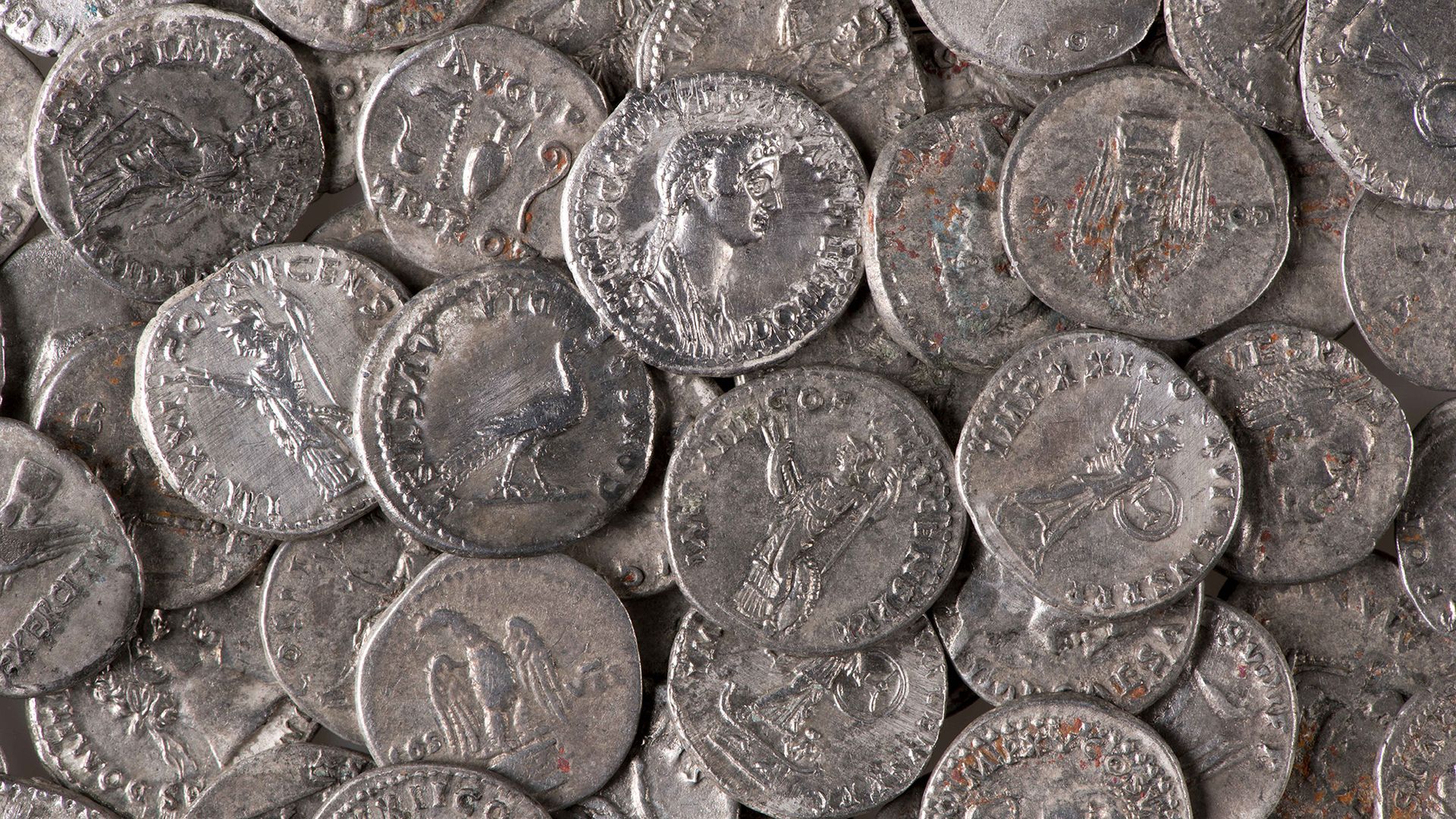
Riedl was using a licensed metal detector and immediately contacted authorities when his equipment indicated a large metallic presence underground. Archaeologists excavated the site and recovered 934 silver denarii, the standard currency of the Roman Empire, weighing nearly 7 pounds.
The coins date from 148 B.C. to the reign of Emperor Hadrian, who ruled from A.D. 117 to 138, though most originated during the Flavian dynasty (A.D. 69-96). Experts believe someone collected the coins around A.D. 100, but buried them during Hadrian’s time, likely to protect the money as banks did not exist then. The owner never retrieved the coins, possibly due to their death.
Marjanko Pilekić, a numismatist, noted the hoard’s location near the Roman limes, the northern frontier of the Roman Empire, suggests it was buried soon after the latest coin was minted. Rahel Otte, the archaeologist leading the excavation, calculated that a Roman legionary would have needed to save six years of pay to amass the value of the coins. The hoard is now on display at the Rhineland Regional Museum in Bonn.