Indonesian memes shape religious dialogue and cultural expression

Headline and summary by local AI
Fitri Murfianti, a researcher at Leiden University, studied how Indonesians use internet memes to navigate religious differences and social identities.
Her work focused on how humor on platforms like Facebook, Twitter, and TikTok allows people to engage with sensitive topics that define daily life in a diverse country. Murfianti found that memes are not new cultural tools but are part of a long history of expression involving humor and repetition, similar to traditional wayang performances and folk tales.
Her research used digital ethnography to observe how ordinary people share, adapt, and react to these images. She noted that different platforms shape these interactions: Facebook fosters community exchanges, Twitter drives political satire, and TikTok provides space for playful, short-form interactions. The study shows that memes can either ease tensions or cause conflict depending on the context. For example, some memes during Ramadan encouraged "playful citizenship," where Muslims and Christians shared jokes about fasting and Easter.
In contrast, the "Borobudur-stupameme" led to legal consequences because it combined political satire with a sacred Buddhist symbol. Murfianti concluded that memes are active cultural expressions where meaning is created by the interplay of humor, platform dynamics, and public interpretation.
Selected and summarized by local AI How we work
More in Discovery
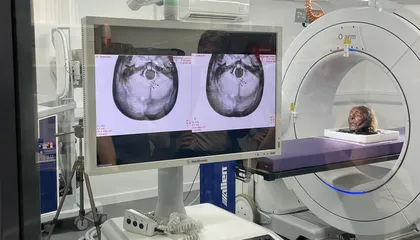
Researchers use CT scans to create 3D model of Jeremy Bentham’s mummified head
smithsonianmag.com · 19 Nov 2026

Researchers identify new Indian bramble shark species found in deep waters
zmescience.com · 14 Nov 2026

Novelist Colin McAdam adapts ancient Greek romance into modern setting
theglobeandmail.com · 18 Nov 2026