German curator proposes Jan van Eyck painted his own self portrait
Headline and summary by local AI
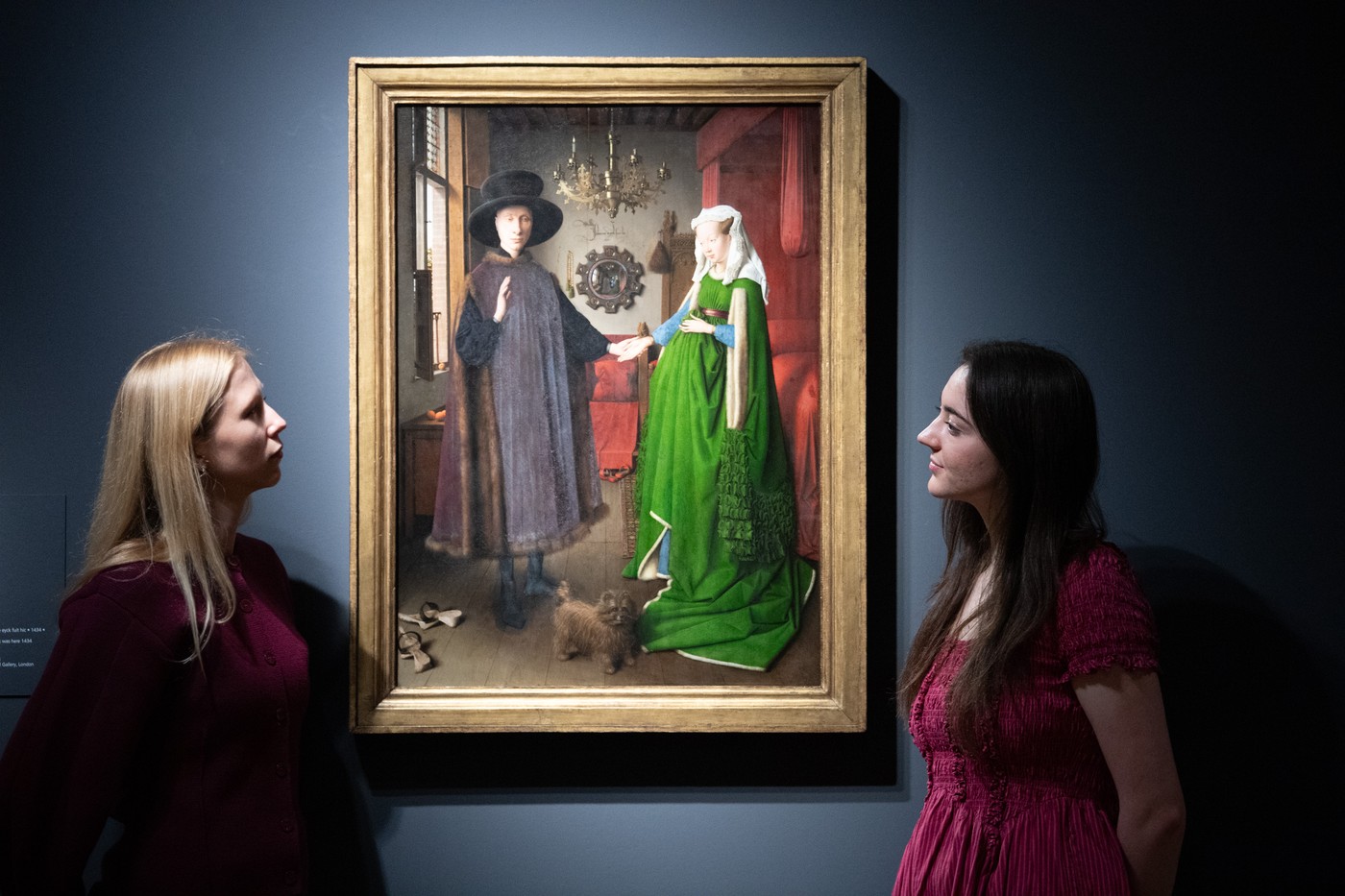
A German curator is challenging the long-held belief regarding the identity of the man in Jan van Eyck's famous 1434 painting, "The Arnolfini Portrait."
The National Gallery in London is hosting an exhibition featuring nine portraits by the Flemish artist. During this event, curator Stephan Kemperdick presented a theory suggesting that the man in the painting is actually Jan van Eyck himself.
If correct, the woman beside him would be his wife, Margaret, who served as a model for another portrait by the artist in 1439. For centuries, historians believed the subjects were a wealthy Italian merchant and his wife who lived in Bruges, Belgium. This theory originated in the 16th century based on inventory records that labeled the work as "hernoul le fin." Scholars previously linked this to the Arnolfini family.
Kemperdick argues that "hernoul le fin" was actually a mocking nickname for a "deceived swindler" rather than a family name. He also points to a statue of Saint Margaret near the woman's head as a clue to her identity. Other experts remain skeptical of the new theory. Co-curator Nicholas Flory described the idea as interesting but speculative, noting that the woman in the painting has brown eyes while the known portrait of Margaret shows blue-grey eyes.
Maximiliaan Martens, an art historian at the University of Gent, maintains that the Arnolfini family remains the most likely identification. The exhibition includes "The Man with the Blue Ribbon," a painting from the Brukenthal National Museum in Romania.
Selected and summarized by local AI How we work
Discovery: Archaeology, new knowledge of art, culture and history, forgotten history uncovered, something lost restored.