Galapagos tortoises return after two-century absence
Summary and headline written by AI from the source article. How we work
Researchers in Ecuador’s Galapagos Islands have rediscovered and are now breeding tortoises with unique genetic links to a population thought lost for over 200 years.
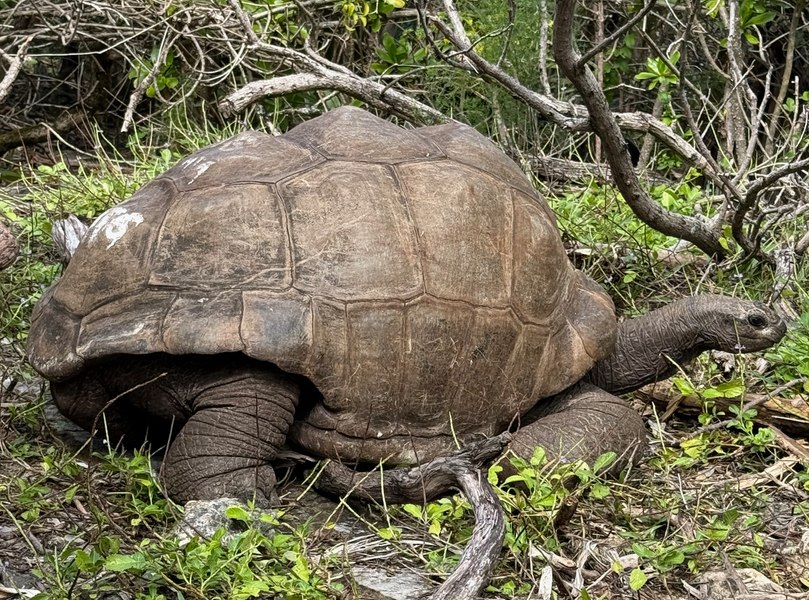
Pirates and whalers hunted the giant tortoises of the Galapagos starting in the 16th century, taking them for food and depleting the population by as many as 200,000 individuals. Each island within the archipelago historically held its own tortoise species, adapted to its environment, but several went extinct due to hunting and invasive species.
In 2000, a research team led by James Gibbs discovered a group of tortoises on the slopes of the Wolf Volcano on Isabela Island with unusually shaped shells. Genetic analysis revealed these “extraterrestrial” tortoises were descended from the Floreana tortoise, presumed extinct since around 1850. Scientists believe sailors may have transported the tortoises between islands, either accidentally or by releasing them when ships became overloaded.
The Fausto Llerena Tortoise Breeding Center now incubates eggs from these rediscovered tortoises, controlling the temperature to determine the sex of the hatchlings. After a period of careful rearing, the young tortoises are released back onto Floreana Island with satellite trackers to monitor their adaptation and impact on the ecosystem. These tortoises are considered “ecosystem engineers” because their feeding habits help disperse seeds and shape the plant communities of the Galapagos, benefitting other species.