Ramnami community inscribe faith on skin to resist caste bias
Summary and headline written by AI from the source article. How we work
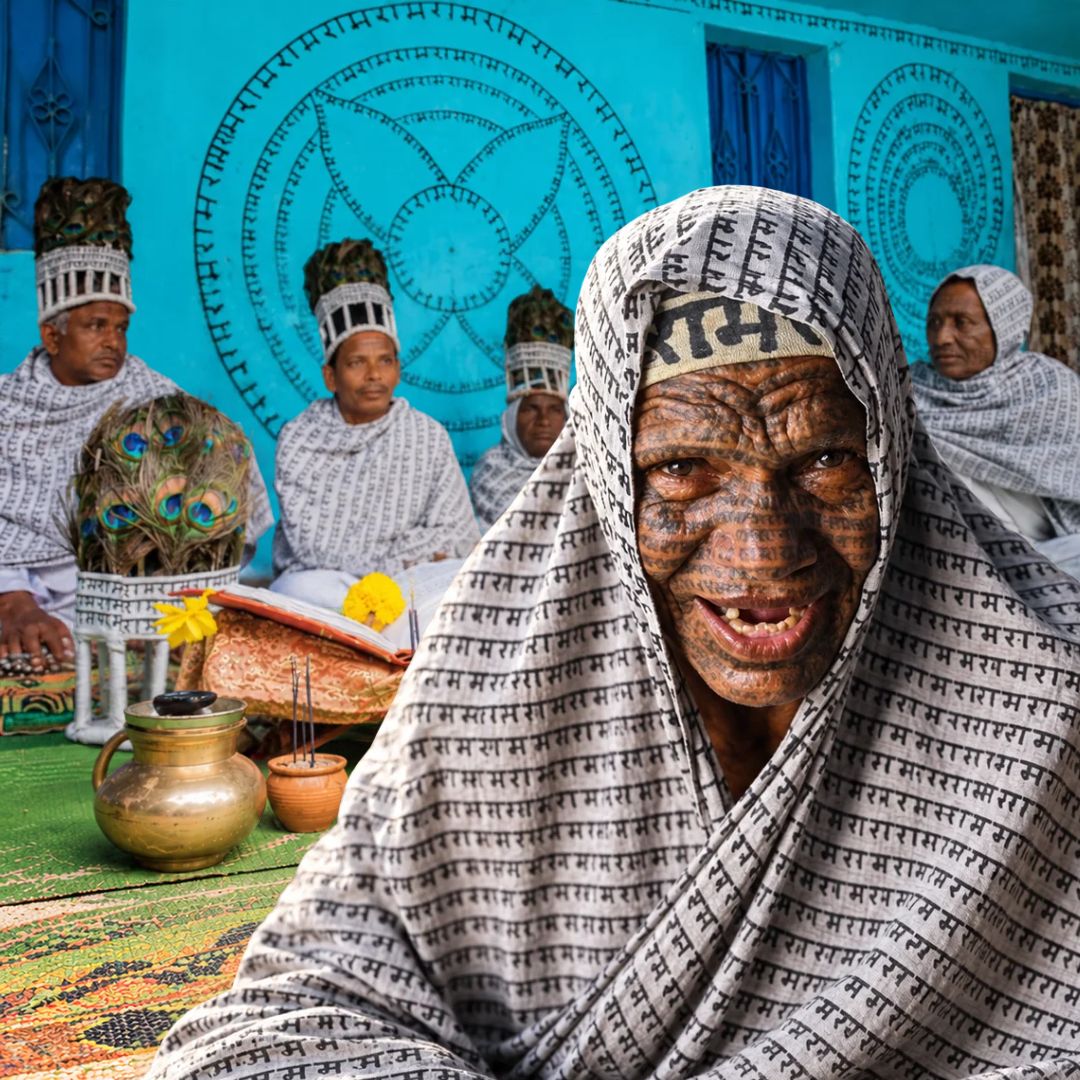
In Chhattisgarh, India, the Ramnami community expresses its devotion to Lord Ram by tattooing his name onto their bodies, a practice that began as a form of resistance against caste-based discrimination.
The tradition reportedly started around 1890 when Parsuram Bharadwaj, a Dalit man, was denied entry to a temple. He began writing Ram’s name on his skin, and others followed, carrying their faith visibly rather than within temple walls.
The Ramnami continue this practice across generations, though the extent of tattooing varies as lifestyles change. Filmmaker Bharatbala Ganapathy documented the community in “Ram-Nami”, which won Best Documentary at the 72nd National Film Awards, with President Droupadi Murmu presenting the award on September 22, 2026. The community’s story reached a wider audience when the Manicktala Chaltabagan Lohapatty Durga Puja Committee in Kolkata chose “Nishan: The Mark” as their Durga Puja theme, inspired by the Ramnami practice.
Artist Aditi Chakraborty designed the theme, and musician Pandit Vishwa Mohan Bhatt composed music for the celebration, with Ramnami community members attending the unveiling. The Logical Indian notes that recognizing this heritage requires addressing the discrimination that originally prompted it.