Sudan’s Darfur region detailed in new social history
Summary and headline written by AI from the source article. How we work
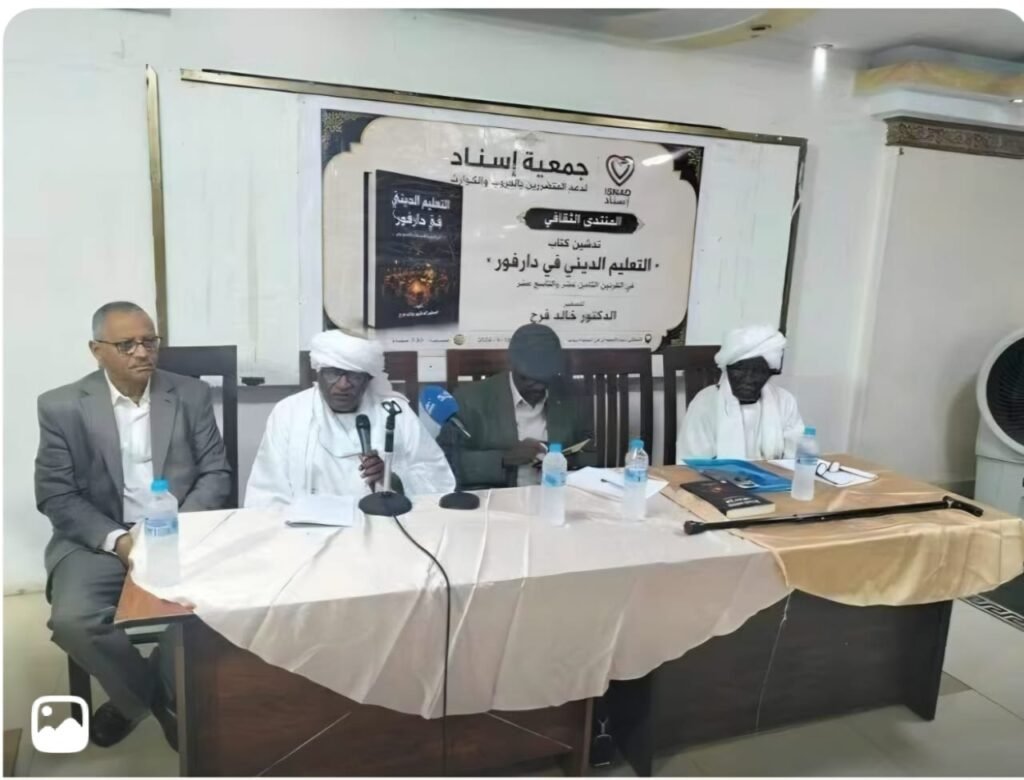
Ambassador Dr Khalid Muhammad Farah published a book detailing the social history of Darfur, a region in Sudan, focusing on religious education during the eighteenth and nineteenth centuries.
Farah’s book, Religious Education in Darfur in the Eighteenth and Nineteenth Centuries AD, is the first scholarly work dedicated to the subject.
It traces the arrival of Islam in Darfur from the sixteenth century through trade routes and explains how the region became an Islamic sultanate under Sultan Suleiman Solong, with sultans actively supporting education by building mosques and schools. The book outlines the institutions of religious education, including khalwas, traditional Qur’anic schools, mosques, and Sufi centres. Students progressed through stages of learning, starting with memorising the Qur’an and advancing to Islamic law, theology, Hadith, and Arabic grammar.
Farah identifies prominent scholars and schools, like those in Tawila, Kabkabiya, and Al-Fashir, and details the scholarly authorisation process called ijazah. Farah also examines the broad role of religious education in Darfur society. He explains how teachers served as judges, mediators, and advisors to sultans, and how schools functioned as economic centres where students farmed and raised livestock.
The book details how Darfur maintained its educational practices even during the Egyptian invasion of 1874, and concludes that the region’s religious education system produced administrators who governed for 300 years. Farah based his research on manuscripts, documents, and interviews.