Investigations can drive change by finding fixable problems
Summary and headline written by AI from the source article. How we work
Journalists at ProPublica and elsewhere demonstrated how investigative reporting can create change even when large-scale reform seems impossible.
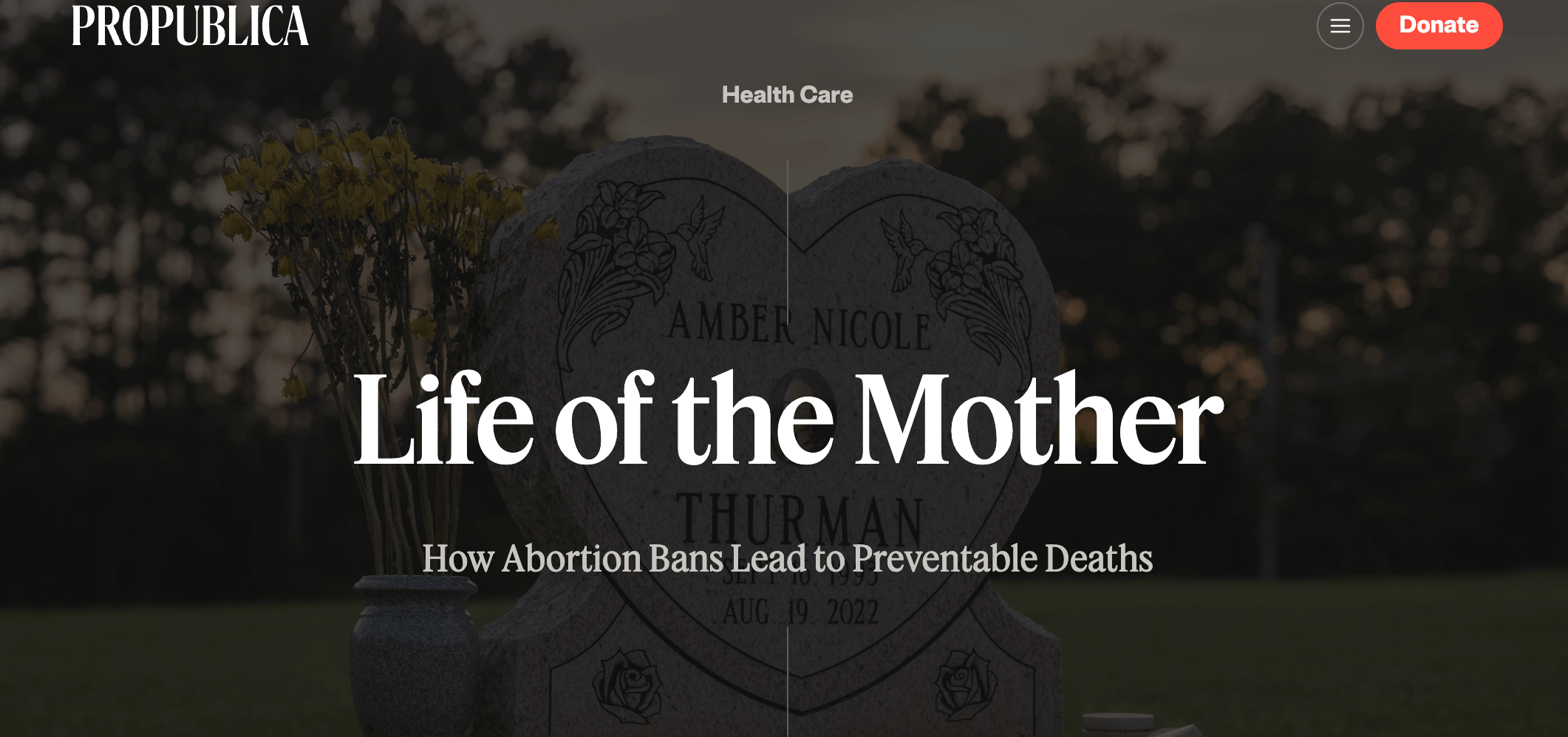
ProPublica’s reporting on abortion bans in Texas revealed women were dying despite legal exceptions meant to protect them. This specificity prompted the Texas Legislature to clarify the exceptions and require training for doctors, improving patient care without overturning the bans. Previously, a reporter discovered a Florida law from 1984 allowed religious reform homes for troubled children to operate without state oversight.
Although public outrage did not lead to overturning the law, the reporter found that the state was sending foster children to these unregulated homes. State officials then removed those children from the facilities. The reporter also compared regulations for state-run facilities to those for the exempt homes, revealing gaps in protection. Specifically, state-regulated facilities prohibited prolonged isolation or shackling of children, practices the reporter found occurring in the exempt homes.
After this reporting, the organization overseeing the homes pledged to change its practices, showing how detailed reporting can lead to concrete improvements even when broader systemic change is blocked.