Barberini Mithraeum reopens with restored frescoes
Summary and headline written by AI from the source article. How we work
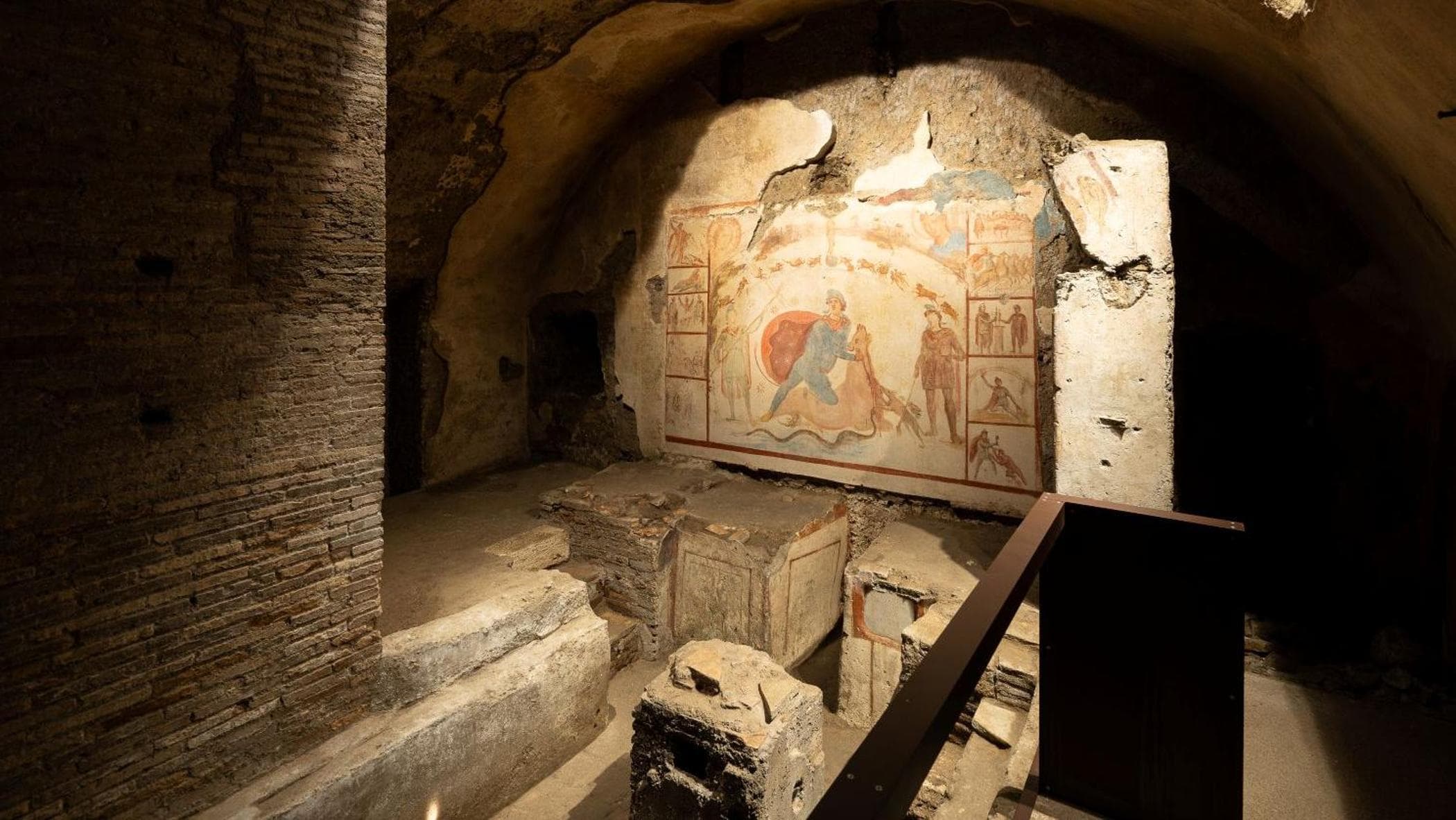
In Rome, the Barberini Mithraeum reopened on October 3rd after restoration, revealing vividly colored frescoes from the ancient cult of Mithras.
Discovered in 1936, the Mithraeum is unusual because of its well-preserved artwork depicting Mithras, a god originating in Persia, slaying a bull. This cult gained popularity throughout the Roman Empire as soldiers carried it from Syria to Spain, establishing underground sanctuaries called mithraea.
The philosopher Porphyry wrote about Mithraism in The Cave of the Nymphs, a unique text that blends Neoplatonic philosophy with beliefs from various religions. Porphyry’s writings are valuable because Mithraism was a secretive religion, leaving few written records. Scholars debate the meaning of the bull-slaying scene, with some believing it represents a Persian myth and others suggesting it’s a star map connected to cosmology.
The Barberini Mithraeum’s frescoes are rare, only one other example exists in Rome, at Santa Prisca, but it is largely faded. As Christianity grew, leaders actively suppressed Mithraism with laws and destruction of sanctuaries, even adopting December 25th as the date for Christmas, previously celebrated as Mithras’s birthday. Despite this repression, the Mithraeum’s artwork survived underground, offering insight into the beliefs of Roman soldiers and the religious landscape of antiquity.