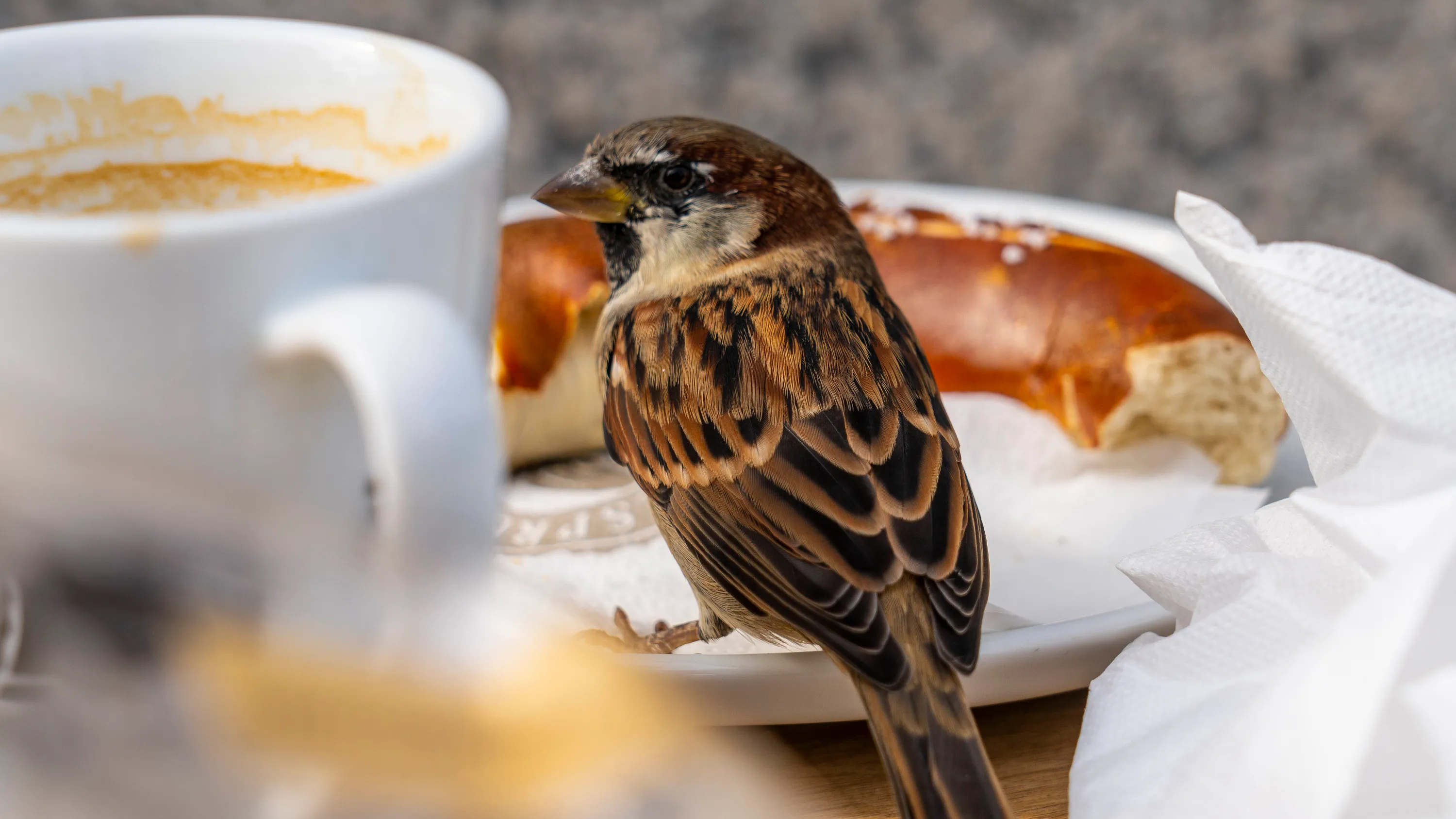
Human activity and agriculture fueled the global expansion of house sparrows
Headline and summary by local AI
Researcher Glenn-Peter Sætre studied how house sparrows became closely linked to human civilization over the last several millennia.
Sætre observed that the distribution of these birds across the world mirrors the expansion of human languages. He investigated whether the birds spread across Eurasia during the Neolithic Revolution roughly 10,000 years ago as farmers moved into new lands. Sætre also examined the role of horses in this expansion.
Horses provide a significant food source for sparrows because the birds pick seeds from horse manure. Historical data shows that when cars replaced horses in cities during the early 20th century, sparrow populations dropped sharply. Genetic research suggests that sparrows already lived in parts of Europe before the advent of agriculture but adapted and multiplied rapidly as humans introduced farming and horses. In the 19th century, Nicolas Pike brought 16 sparrows from Europe to New York to control caterpillar populations.
These birds thrived in the new environment and used the railway system to spread across the continent. Within 60 years, the birds populated all of North America. While sparrows are highly adaptable and social, Sætre warns that their declining numbers in cities like London, Amsterdam, and Berlin serve as a warning sign. The lack of insects, caused by pesticides and modern gardening, makes it harder for sparrows to find the protein needed to raise chicks.
Selected and summarized by local AI How we work
Discovery: Archaeology, new knowledge of art, culture and history, forgotten history uncovered, something lost restored.