Paris unearths ancient gaulish wall revealing city’s origins
Summary and headline written by AI from the source article. How we work
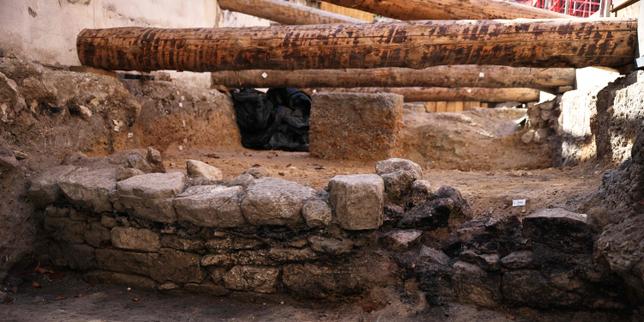
Archaeologists in Paris, France, discovered a roughly 20-meter section of wall dating to the Gallo-Roman period while excavating beneath the Hôtel-Dieu hospital on the Île de la Cité, near Notre-Dame Cathedral.
The wall may be a fragment of a defensive structure from Lutetia, the settlement of the Parisii tribe referenced by Julius Caesar in his account of conquering the city in 52 BCE.
Until now, researchers lacked definitive proof of the Parisii settlement’s location, relying only on Caesar’s description of an island connected by bridges within a bend of the Seine River. The team found evidence of fire damage on part of the wall, which could correspond to Caesar’s account of the Parisii setting their own structures ablaze before the battle with Roman troops. Excavations also revealed fragments of amphorae and a spear.
Carbon-14 dating indicates the wall was built between 200 BCE and 10 CE, though further study will refine this estimate. City officials and the Ministry of Culture are collaborating on the project alongside the National Institute of Archaeological Preventive Research. They plan to create a mold of the wall and incorporate original stones into a reconstructed section for display in a Paris museum.
Archaeologists believe the discovery provides a crucial new understanding of the origins of Paris, a city with a history stretching back to the Gaulish tribes.