AI model identifies new mathematical concepts in kurt Gödel's notebooks

Headline and summary by local AI
Jan von Plato, a logician at the University of Helsinki, used an AI model to analyze the private notebooks of Kurt Gödel, a mathematician born in Brno, Czech Republic.
Since 2017, von Plato has worked to systematically study these journals, which contain over 1,000 pages of dense logic and mathematics from the early 1940s. The journals were difficult to interpret due to their archaic notation and complex reasoning.
In September this year, von Plato introduced the Claude AI model into his research by providing it with human transcriptions, his own books, and specialized literature. The AI produced a 650-page analysis in just a few days, a task that previously took von Plato about one page per week. This analysis revealed dozens of results that anticipated mathematical knowledge from the 1970s and 1980s, as well as 14 logic topics that remained unexamined for decades.
Von Plato verified the AI's findings using the Coq software program. Out of 663 mathematical claims identified by the AI, approximately 400 were valid in their original form, 200 required adjustments, and 50 were incorrect. While these notebooks capture Gödel's path toward discoveries, von Plato notes that some entries are merely unfinished thoughts rather than completed proofs.
The project, which has already produced five books for the European Commission, continues to use these human-transcribed records to facilitate computer analysis of Gödel's work.
Selected and summarized by local AI How we work
More in Discovery

Indigenous leader Diana Jembuel Morales seeks to create Journalism School in Colombia
lasillavacia.com · 15 Nov 2026
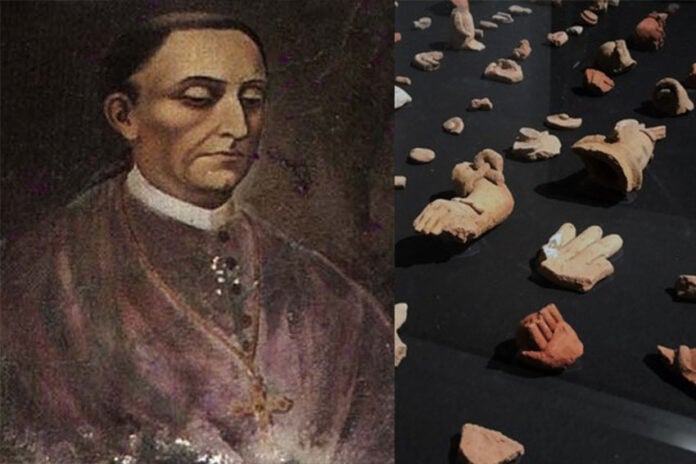
A new museum in Mexico explores the legacy of Spanish Friar Diego de Landa
mexiconewsdaily.com · 17 Nov 2026

Researchers identify new egg eating snake species in Ethiopia
phys.org · 19 Nov 2026