Monet’s cataracts altered color perception
Summary and headline written by AI from the source article. How we work
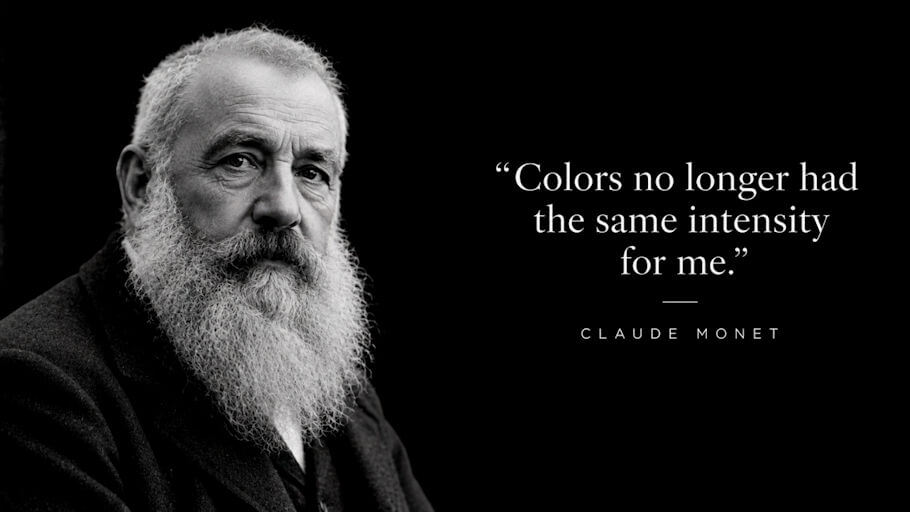
In France, Claude Monet received a cataract diagnosis in 1912, which gradually affected his ability to accurately judge color during his final years as a painter.
The condition clouded his eyes’ lenses, filtering light and making it difficult to distinguish between shades, especially blues and purples. Monet continued to paint, relying on his long experience with pigments and tube labels to aid in identifying colors, though this didn’t fully restore his ability to judge how colors would appear when mixed.
Medical records and surviving spectacles show Monet underwent surgery on his right eye in 1923. While the surgery improved some aspects of his vision, it also created new challenges, like an exaggerated perception of blue. He continued to work despite these difficulties, completing the expansive water lily murals that now reside at the Musée de l'Orangerie in Paris. Researchers, including Michael F. Marmor and James G. Ravin, have studied Monet’s condition using ophthalmological simulations and historical documents.
Their work demonstrates that an eye can still transmit an image even when a painter’s ability to reliably interpret color is compromised, and that simply looking again doesn't guarantee a more accurate assessment when the distortion is consistent. This analysis is useful for understanding the creation of his later paintings and also resonates with those experiencing age-related vision changes.