Artificial intelligence maps expert definitions of life across conceptual gradients
Headline and summary by local AI
Researchers used large language models to map how contemporary scholars define life, revealing that expert views align along continuous conceptual gradients rather than isolated categories.
The team analyzed brief definitions submitted by sixty-eight scholars from fields including theoretical biology, philosophy, computer science, physics, artificial intelligence, and systems theory. These scholars were based in fourteen countries, including the United States and the United Kingdom.
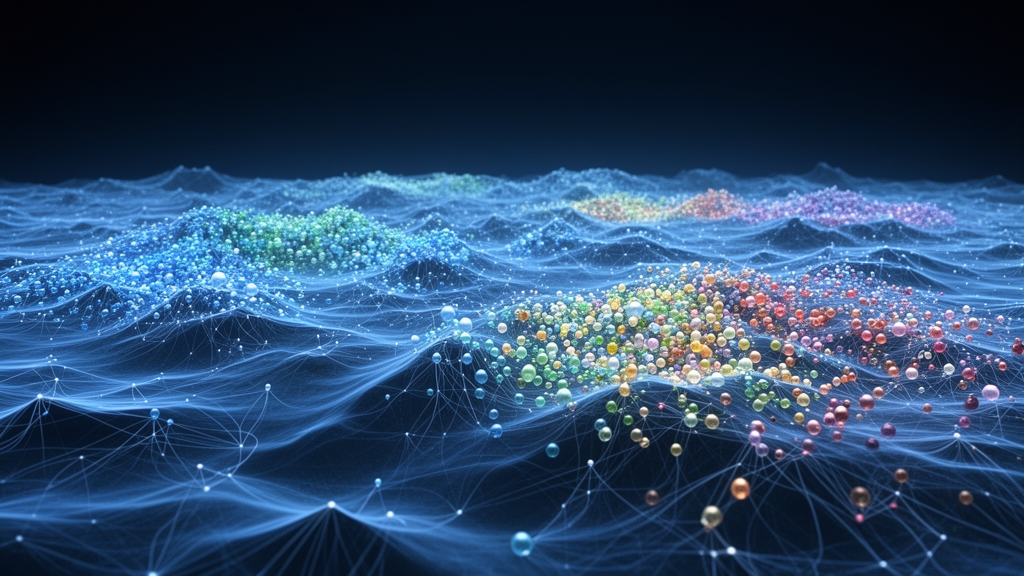
The researchers used a computational framework involving Claude 3.7 Sonnet, GPT-4o, and Llama-3.3 70B Instruct to score the conceptual alignment of these definitions on a scale from minus one to positive one. The models showed high consistency in their evaluations, identifying commonalities across different scholarly perspectives. The analysis grouped the responses into eight stable clusters, which the researchers mapped onto a two-dimensional semantic space.
One axis showed a transition from observer-dependent perceptions to objective material descriptions, while the other contrasted entity-based definitions with process-based frameworks. The study found a dense core of definitions centered on cognitive autonomy and dissipative self-organizing systems. These views bridge metabolic operations with computational and behavioral principles. Other peripheral clusters included views that defined life purely as self-replicating information or as a matter of cognitive recognition.
The researchers noted that the mapping helps position ambiguous phenomena, such as biological viruses and artificial intelligence, within a continuous landscape of life-related concepts.
Selected and summarized by local AI How we work
Discovery: Archaeology, new knowledge of art, culture and history, forgotten history uncovered, something lost restored.