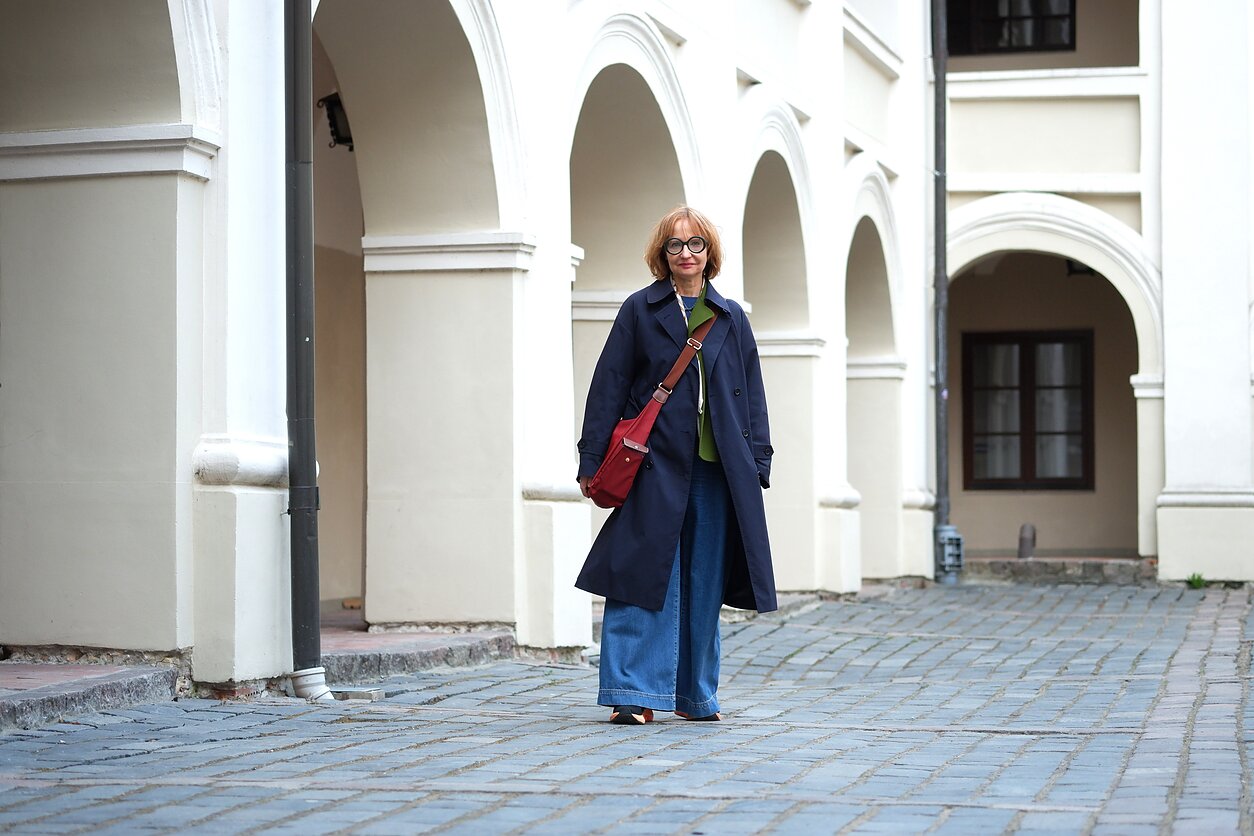
Jolanta Gelumbeckaitė establishes Lithuanian language studies in Frankfurt
Headline and summary by local AI
Jolanta Gelumbeckaitė teaches Lithuanian language and Baltic linguistics at the Goethe University Frankfurt in Germany.
She has spent over twenty years instructing students on topics including historical Lithuanian linguistics and Prussian languages. Her work aims to demonstrate the importance of Baltic languages within the broader context of Indo-European studies. Gelumbeckaitė faced a challenge in 2007 after completing her habilitation thesis in Germany.
Although her academic path was successful, the university could not offer her a permanent position because her program was project-based. To prevent her courses from disappearing, she sought support from the Lithuanian Ministry of Education, Science and Sport. The ministry began funding four hours of her lectures per week. Later, in 2009, Meilutė Ramonienė from Vilnius University helped expand the program, which strengthened the position of Lithuanian language studies at the university. The program expanded significantly over the years.
In 2011, Gelumbeckaitė won a competition to become a junior professor, securing her position. The university launched a bachelor's program in Baltic linguistics in 2015 and a master's program in 2017. Students now study complex topics such as verb valence and accentology. They also use the Elbing dictionary to compare different Indo-European languages. Gelumbeckaitė advocates for a system where lecturers are permanent university employees with social guarantees rather than just externally funded guests.
She believes these educators should act as ambassadors for Lithuania to build long-term academic ties. She also promotes international cooperation, such as joint doctoral programs and double degrees. A collaborative master's program between the universities of Frankfurt and Pisa already provides students with multiple degrees and broader academic experience.
Selected and summarized by local AI How we work
Discovery: Archaeology, new knowledge of art, culture and history, forgotten history uncovered, something lost restored.