Galileo calculated hell's dimensions for Dante's inferno
Summary and headline written by AI from the source article. How we work
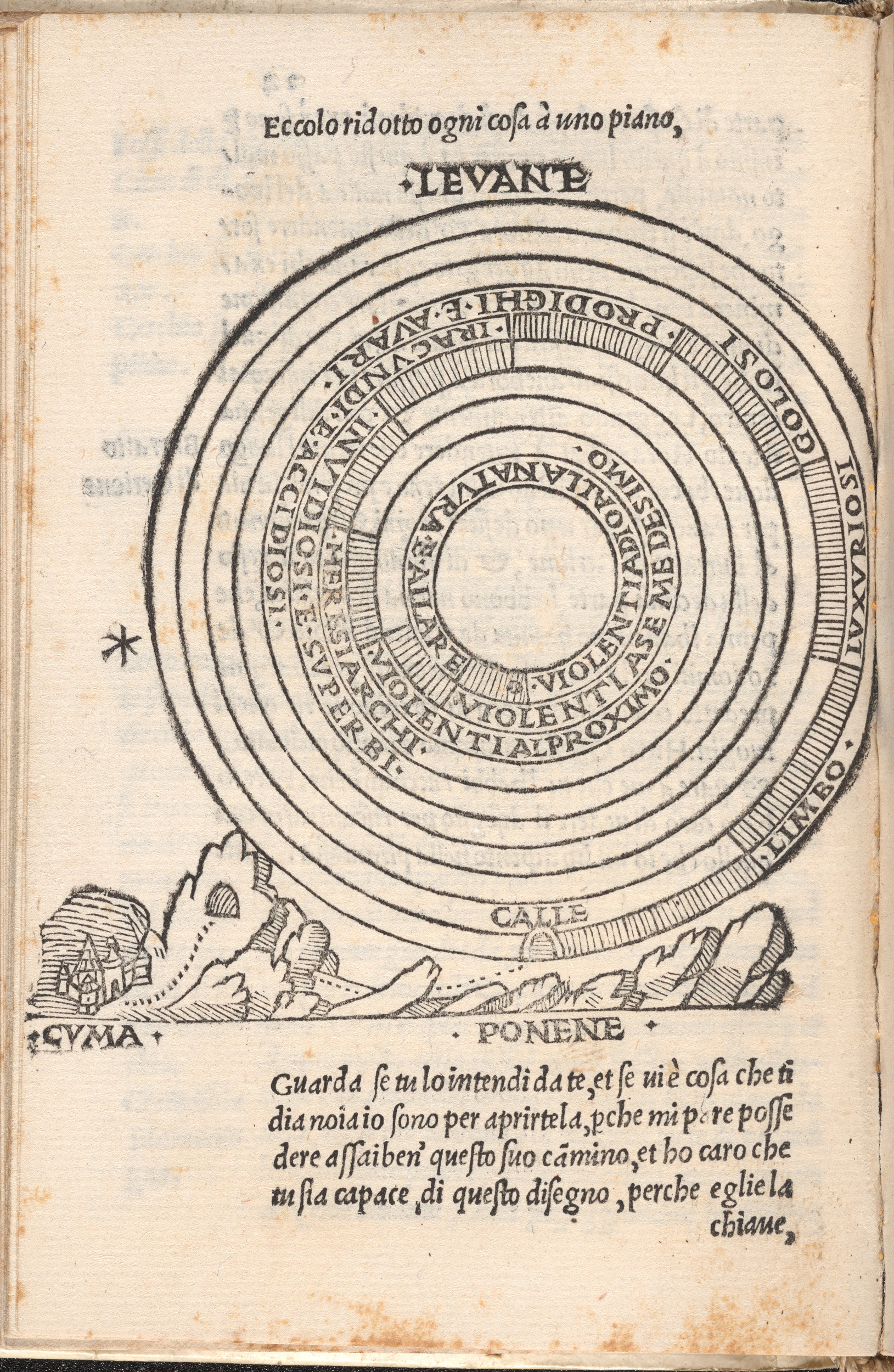
Around 1588, Galileo Galilei, then a young scholar in Florence, Italy, calculated the size and shape of hell as described in Dante Alighieri’s Divine Comedy.
The Florentine Academy tasked him with determining the underworld’s dimensions, and Galileo proposed a roof centered over Jerusalem, with a width equal to the Earth’s radius and a thickness of 600 kilometers.
Galileo based his calculations on architectural precedents, specifically Filippo Brunelleschi’s dome on the Florence Cathedral, and he disagreed with earlier estimates made by scholar Alessandro Vellutello. Galileo’s model aligned with the work of architect Antonio Manetti, and some speculate that local rivalries between Florence and Lucca may have influenced the debate. Mathematician Mark Peterson suggests that Galileo’s work on Dante’s imagined universe foreshadowed concepts in mathematical physics.
These lectures at the Florentine Academy helped Galileo secure a position as a mathematics lecturer at the University of Pisa, and he continued to navigate the complex relationship between science and religious belief throughout his life.