Cannupa Hanska Luger links bison slaughter to Indigenous trauma
Summary and headline written by AI from the source article. How we work
Cannupa Hanska Luger, an artist and citizen of the Three Affiliated Tribes of the Fort Berthold Reservation, presented a new exhibition called American Traditional at the Garth Greenan Gallery in New York City.
The exhibition features works combining wood, ink, and archival material that explore the history of the American bison and its connection to the trauma experienced by Plains Indigenous peoples.
Luger, who grew up on the Standing Rock Reservation, draws on historical accounts like Mari Sandoz’s The Buffalo Hunters to illustrate how the near-extermination of the bison was linked to the deliberate dismantling of Indigenous ways of life. The artist’s work builds on scholarship from Cree scholar Tasha Hubbard, who argues that the campaign to kill the bison amounted to a genocide by proxy, a second wave of trauma for Plains Indigenous communities following the spread of epidemic disease.
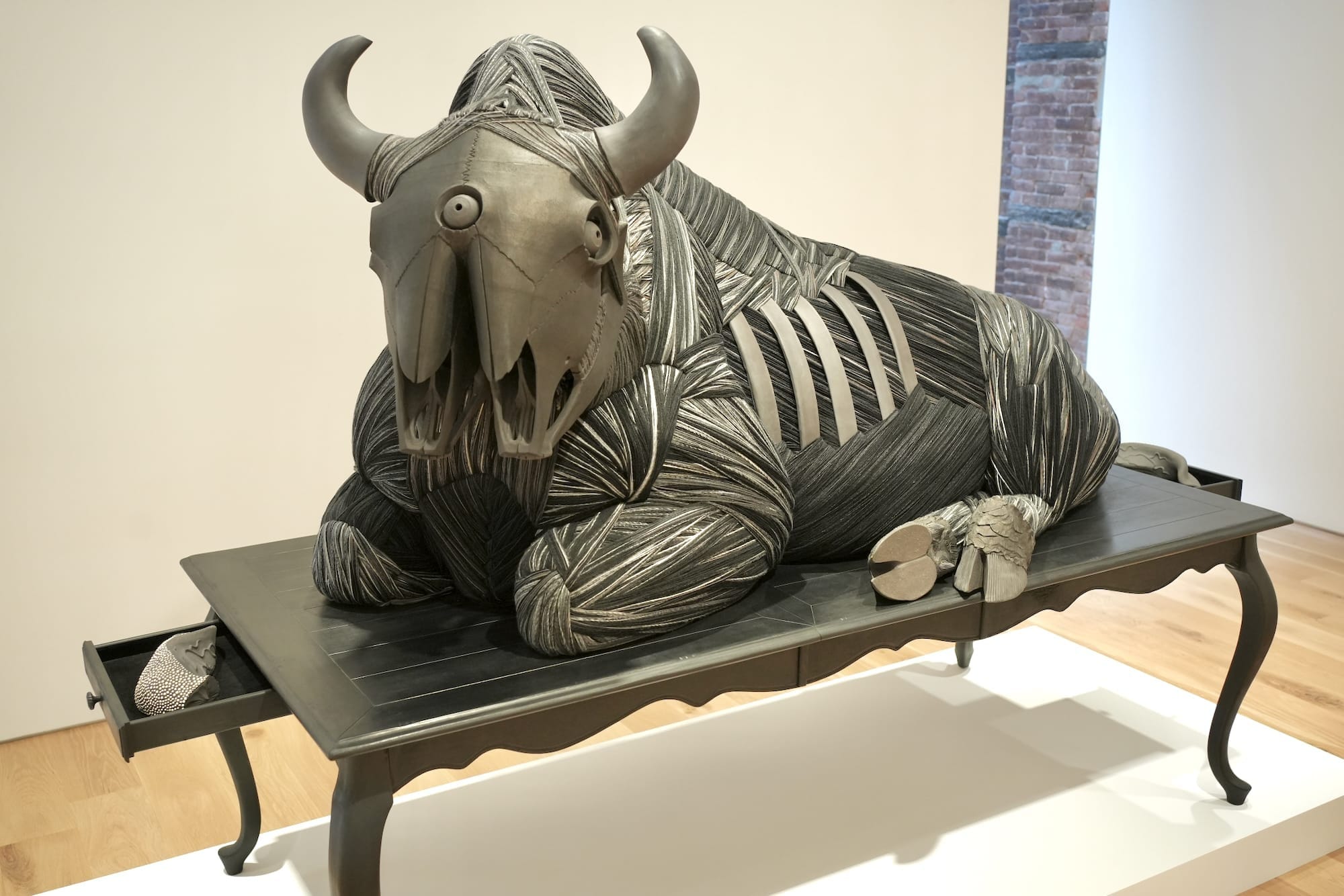
Historical figures like Colonel Richard Irving Dodge and General Philip H. Sheridan openly advocated for the destruction of the bison as a means of controlling and diminishing the Indigenous population, with Sheridan reportedly encouraging hunters to continue the slaughter. Luger’s piece “Requiem” (2026) features a black, abstracted bison placed on a darkened 19th-century dining table, while “Shoots Today, Kills Tomorrow” (2026) further explores these themes.
The artist’s work seeks to acknowledge the profound loss suffered by Native American groups who relied on the bison for nearly every aspect of their existence for thousands of years, and to highlight the intentionality behind its destruction.