Lebanese novel interweaves past and present through konya bride
Summary and headline written by AI from the source article. How we work
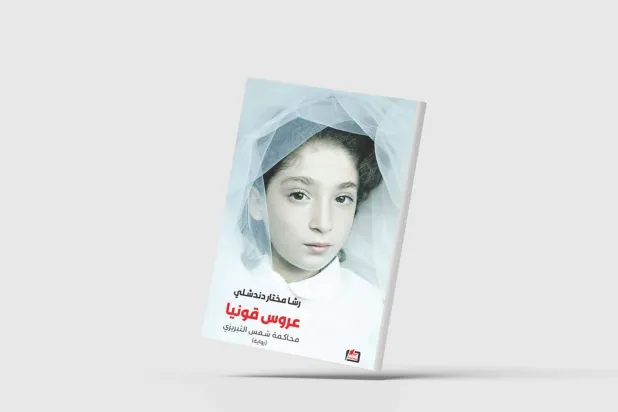
Lebanese author Rasha Mokhtar Dandashli’s novel, “The Bride of Konya.
The Trial of Shams al-Tabrizi,” follows two women separated by eight centuries. One is a contemporary Beirut resident grappling with psychological distress, the other is Kimya Khatun, a girl who lived in 13th-century Konya, Turkey, and whose story revolves around the mysterious relationship between Jalaluddin Rumi and Shams al-Tabrizi.
The novel doesn’t present time as a simple line, instead blending the worlds of the two women to blur the boundaries between memory, imagination, and metaphysical experience. The eight centuries between the two characters become a shared narrative space where memories intersect and Kimya’s voice, often overlooked in the famous account of Rumi and Shams, is reclaimed.
The protagonist’s work as a documentary film editor serves as a structural key to the novel, mirroring its own narrative montage, a weaving together of times, places, and memories. This allows the old story to reflect present-day crises, and the editor’s work reflects her mind, which gathers and reassembles fragmented images and times. The novel draws parallels between the women, extending beyond shared pain and feelings of abandonment to the wounds of childhood itself.
Dandashli uses historical sources, including “Manaqib al-Arifin” by Ahmad Aflaki, a key reference on the lives of Rumi and Shams, but treats them as starting points rather than definitive truths.
The author explores what Kimya might have felt as a child caught within one of history’s most famous spiritual relationships, and scrutinizes the human cost of devotion, specifically Rumi’s agreement to marry the thirteen-year-old Kimya to Shams, a decision seemingly intended to secure Shams’s position and silence rumors about their relationship.