National Agricultural Development Fund supports 4,000 farmers in Nigeria
Headline and summary by local AI
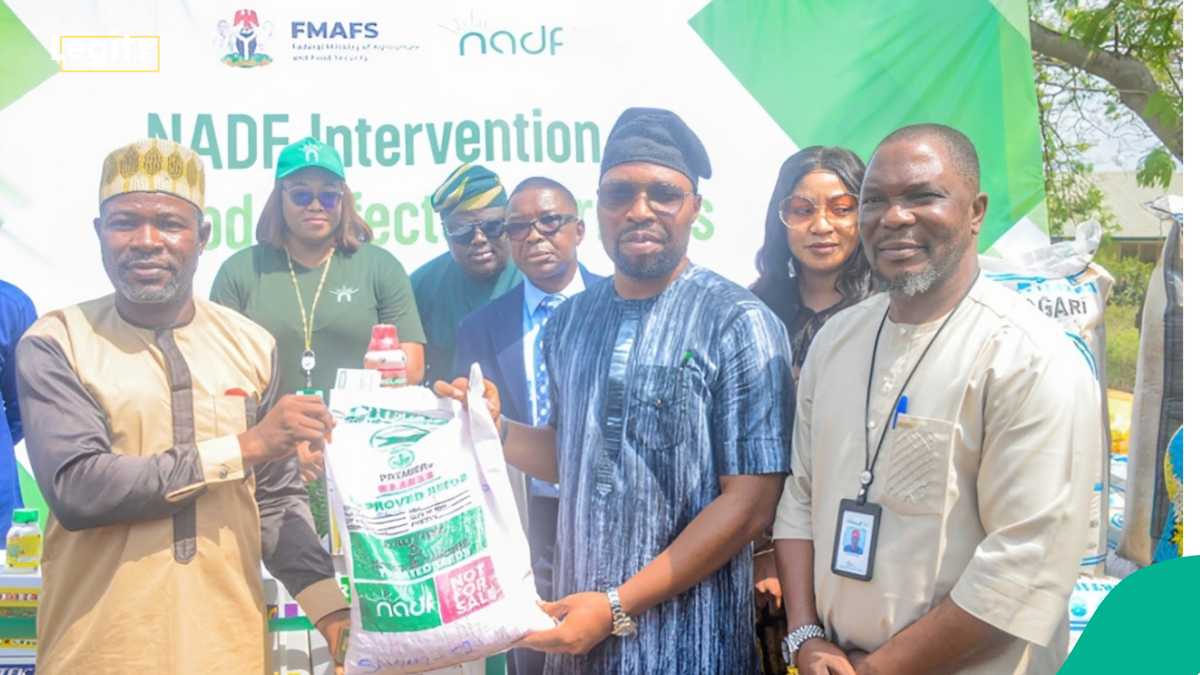
The National Agricultural Development Fund (NADF) launched an emergency intervention to support 4,000 smallholder farmers in Ogun State, Nigeria, who suffered crop and asset damage during the 2026 rainy season floods.
The fund will provide fertilisers, herbicides, and pesticides to 2,800 maize farmers and 1,200 rice farmers. Mohammed Ibrahim, the Executive Secretary and Chief Executive Officer of the NADF, stated that the initiative aims to prevent flood-related disruptions from affecting future farming seasons.
The project includes a three-part structure involving a needs assessment to verify damages, the distribution of emergency inputs, and the introduction of climate-smart recovery measures. To ensure accountability, the NADF will use a digital monitoring and evaluation framework to track the distribution of supplies and measure how much the farms recover. Ibrahim said the organisation will also provide agricultural extension services, early-warning systems, and capacity-building programmes to help farmers prepare for future weather shocks.
The agency expects to complete the entire intervention within seven weeks to ensure farmers do not miss critical production windows. Bolu Omotowo, the Ogun State Commissioner for Agriculture, welcomed the initiative and noted that the NADF previously supplied over 20,000 bags of fertiliser to the region four months earlier. Omotowo asked the NADF to expand future support to include cotton farmers in the state.
Separately, the article notes that the National Agricultural and Rural Development Agency (NARD) launched a similar recovery programme for over 22,000 farmers across six states.
Selected and summarized by local AI How we work
Solutions: Technology, policy and initiatives already in use against a real problem, with results to show.