Ancient mastodon tooth unearthed in California stream
Summary and headline written by AI from the source article. How we work
Brigid Lynch, a geomorphologist working in California’s San Mateo County, discovered a 10,000-year-old mastodon tooth while studying a stream.
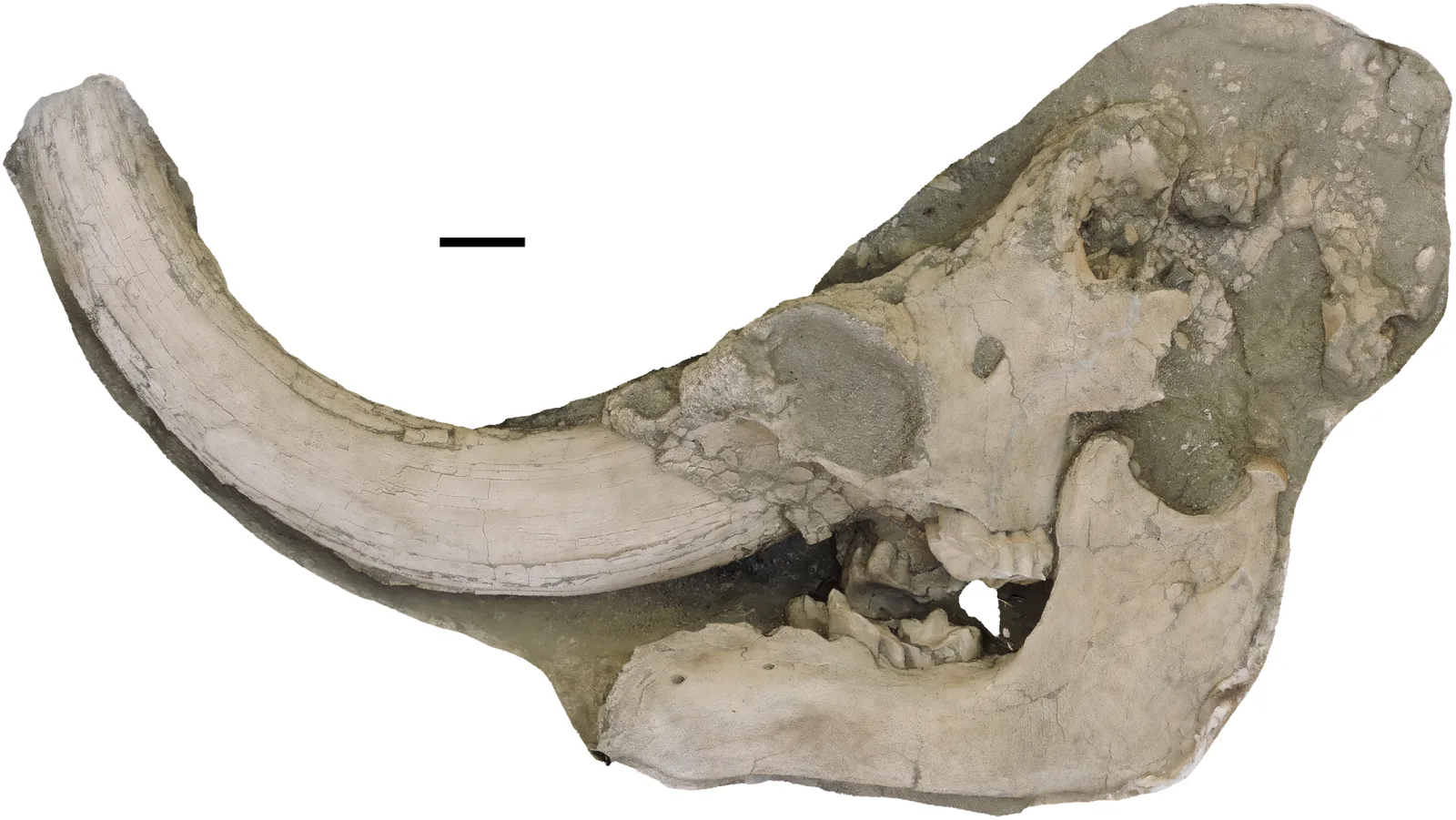
Lynch and her team from Balance Hydrologics were researching ways to improve the habitat for the California red-legged frog, an endangered species, when they found the fossil. Initially mistaken for an unusually shaped rock, the object proved to be a complete molar from a Pacific mastodon, an extinct relative of the American mastodon.
Paleontologists identified the tooth as belonging to an adult animal and noted its exceptional state of preservation. The molar measures approximately 21.6 centimeters long, 17.8 centimeters deep, and 7.6 centimeters wide. Wayne Thompson, a paleontologist, described the find as the most complete mastodon molar discovered in the area. Researchers at the Doerr School of Sustainability at Stanford University will now conduct carbon dating to confirm the age estimate.
They also plan to create a 3D scan and a replica of the tooth for public education. The Pacific mastodon lived in western North America during the Pleistocene epoch and was officially recognized as a distinct species in 2019. It differed from the American mastodon with narrower teeth, thicker leg bones, and differently shaped tusks before becoming extinct around 11,700 years ago.