Cooperative transforms H’Mông cattle farming in Vietnam
Summary and headline written by AI from the source article. How we work
Cát, a Tày ethnic minority man from Tuyen Quang province in Vietnam, returned to his hometown and began working with local farmers to improve H’Mông cattle farming.
After building a pigeon farming business in Đồng Nai, Cát’s operation was disrupted by Covid-19. He then noticed unique marbling in the meat of local H’Mông cattle, suggesting potential for a premium meat market.
Traditionally, families in the region only raised one or two cattle for farming or occasional sale, resulting in an unstable supply. Cát used his experience with cooperatives to connect farmers and search for better sales opportunities for this local breed. He started with seven households and around 200 cattle in 2019, facing initial skepticism from some farmers who believed the cattle were too attached to their original homes.
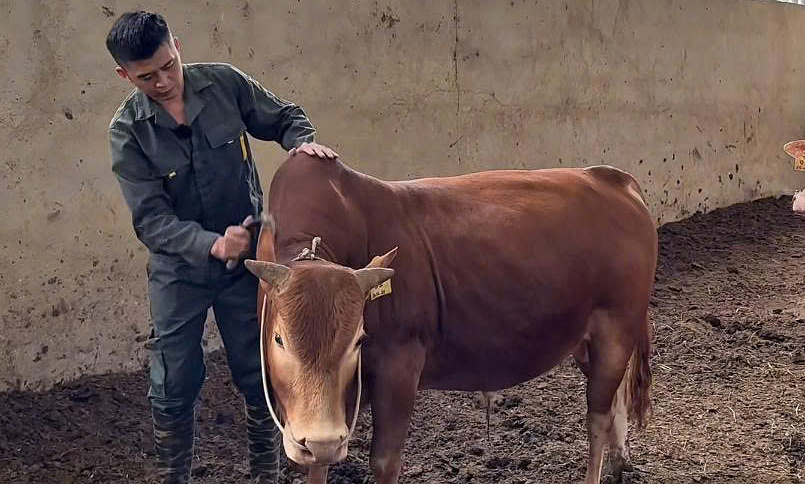
Cát Lý Cooperative now connects over 1,000 households with nearly 4,000 cattle, becoming the largest H’Mông cattle farming model in Vietnam. The cooperative guides farmers on breeding, care, and timing of sales, and offers financing options. They track each animal with ear tags to monitor its health and history.
Despite this growth, only a fraction of the cattle consistently produce the high-quality, marbled meat that attracts premium prices, and the cooperative is currently working to expand its operations and secure funding for slaughtering and preservation facilities.