Mussel farming supports poor households in Vietnam coastal village
Headline and summary by local AI
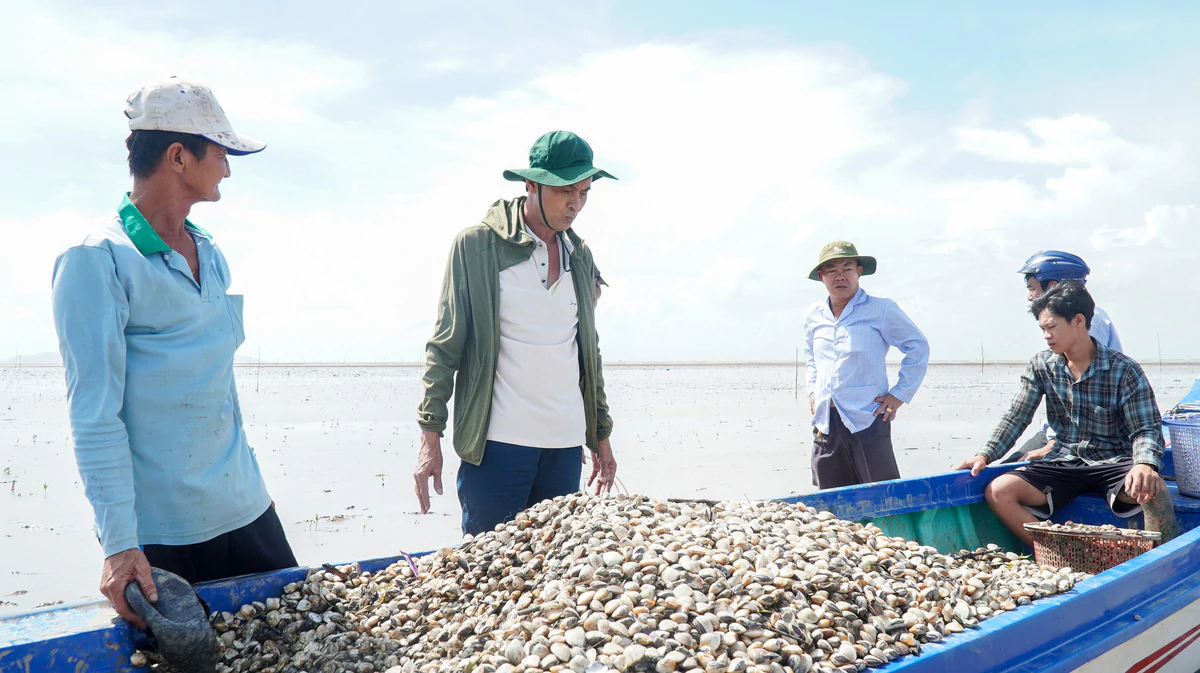
The Đất Mũi Mussel Cooperative provides capital and seeds to 98 poor and near-poor households in Đất Mũi, a coastal commune in Vietnam.
The cooperative manages a production area of 28 hectares of alluvial water surface provided by the provincial government and the Cooperative Alliance. This initiative allows residents to participate in mussel farming without initial investment costs, as they receive a share of the profits after expenses during harvest.
The cooperative faces land shortages because siltation has reduced the available area for high-quality mussel farming. While the cooperative originally received 28 hectares, only about 4 to 5 hectares of suitable sandy soil remain. Much of the remaining area is located within a national park forest.
Additionally, the high terrain of the current farming site causes tides to rise 2 to 3 hours slower than in lower areas, which limits natural food sources and extends the growing period by about six months. Local authorities are now requesting that relevant departments and the national park coordinate to review aquaculture planning. They seek to find solutions for land area constraints so the cooperative can expand production and continue improving the livelihoods of the local community.
Selected and summarized by local AI How we work
Belonging: Community bonds, rootedness, and living cultural practices and heritage.